Is Your Loyalty Program Quietly Losing Customers? Here’s How to Tell
An outdated loyalty program does not fail overnight. It quietly loses engagement, relevance, and impact. If your customers are not returning, interacting, or valuing your rewards, it may be time to rethink your approach. Here are the key signs to watch for and how to fix them.
Apr 1, 2026
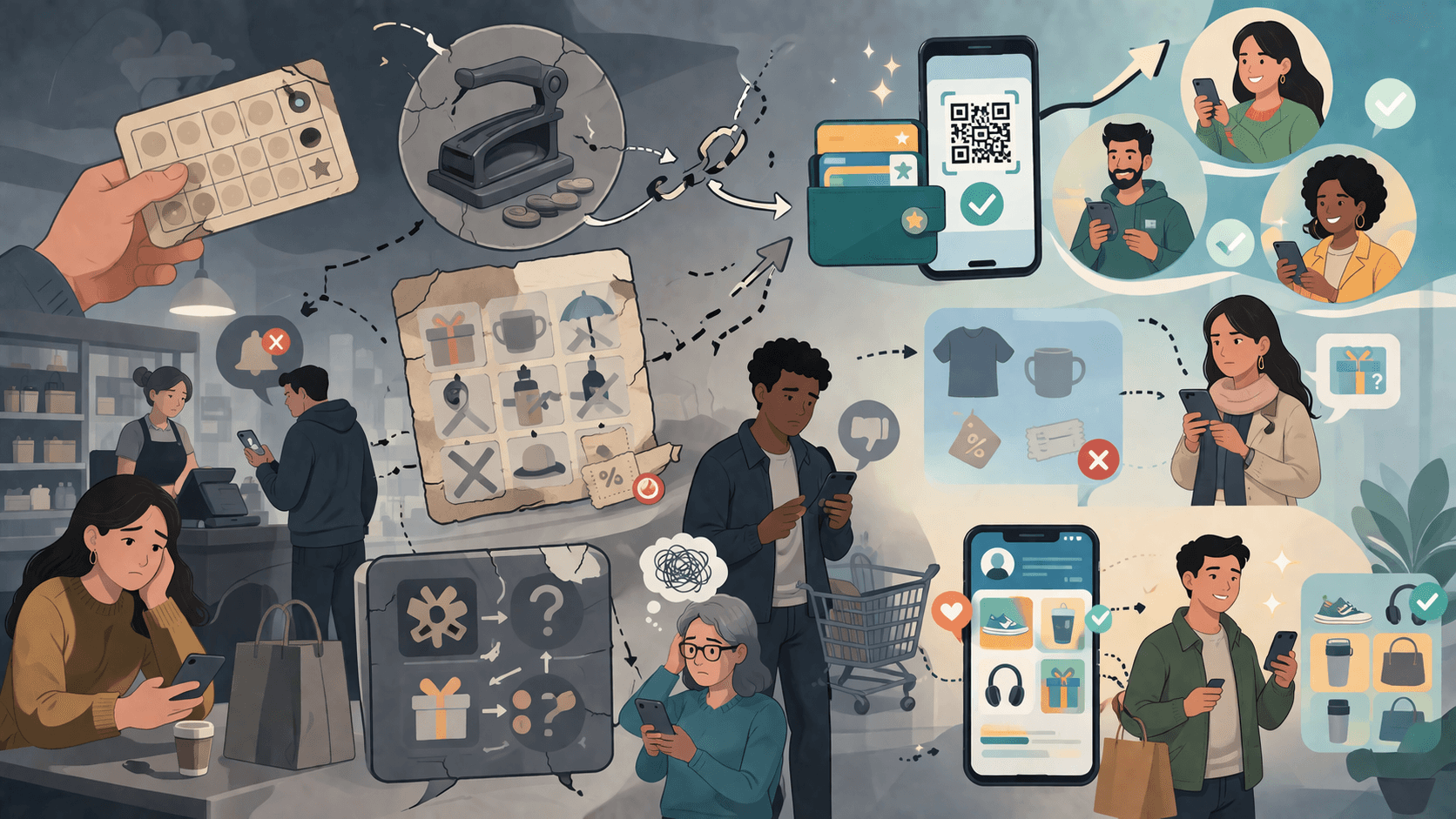
Most loyalty programs do not fail overnight. They slowly lose relevance while still appearing to function as expected. Customers still sign up, points are still issued, and campaigns continue to go out. But beneath the surface, engagement drops, repeat purchases plateau, and the program stops influencing real buying behavior. This is where many retail and ecommerce teams get stuck. They assume the problem lies in campaigns, channels, or timing, when in reality the loyalty program itself may be outdated. This article helps you identify the warning signs, understand what is really going wrong, and explore how to rebuild loyalty into something that actually drives retention and revenue.
Section 1: The Problem: When Loyalty Stops Feeling Like Loyalty
Why “It’s Still Running” Doesn’t Mean It’s Still Working
A loyalty program that exists is not necessarily a loyalty program that performs. Many brands treat loyalty as a static system instead of something that evolves with customer expectations. Over time, what once felt engaging becomes predictable and easy to ignore. Customers stop noticing it, and internally it fades into the background. This creates a dangerous illusion where everything looks stable, but performance is quietly declining.
7 Clear Signs Your Loyalty Program Is Outdated
Your Best Customers Are Acting Like First-Time Buyers
If your most loyal customers are not returning more often or spending more than new customers, your program is not influencing behavior. Loyalty should create differentiation, not sameness.
Engagement Has Dropped, But No One Knows Why
Open rates, clicks, and interactions start declining even when campaigns remain consistent. This often happens when loyalty is not visible during key moments like browsing or product discovery.
Discounts Are Doing All the Heavy Lifting
If your loyalty program only works when discounts are involved, it is not building real loyalty. It is simply training customers to wait for offers.
Your Program Feels the Same for Everyone
Generic rewards and messaging reduce perceived value. Without personalization, customers have no reason to engage consistently.
It Lives in Silos Instead of the Customer Journey
Many programs exist only in emails, apps, or at checkout. If loyalty is not present during browsing or content engagement, it misses the moments that actually influence decisions.
Your Team Struggles to Evolve It
If launching new campaigns or experimenting with rewards takes too long, your technology is limiting growth.
Customers Aren’t Talking About It Anymore
A strong loyalty program creates advocacy. If customers are not mentioning it or engaging with it organically, it has likely lost relevance.
What’s Really Breaking Behind the Scenes
These symptoms usually point to deeper issues. Many loyalty programs are built on outdated technology that cannot support real-time personalization or omnichannel integration. Others rely on static reward structures that do not adapt to customer behavior. Most importantly, they are disconnected from how customers actually shop today. Loyalty is often treated as a separate layer instead of being embedded into discovery, browsing, and content experiences.
Section 2: The Solution: Rethinking Loyalty for How Customers Actually Shop Today
Modern Loyalty Isn’t a Program. It’s an Experience Layer
Today’s customers do not think in terms of programs. They respond to experiences. Loyalty needs to be embedded across touchpoints so that it feels natural and continuous. Instead of appearing only after a purchase, it should influence decisions before, during, and after the buying journey.
What High-Performing Loyalty Programs Do Differently
They Show Up During Discovery, Not Just at Checkout
Modern loyalty programs are visible when customers are browsing products, exploring collections, or engaging with content. This ensures loyalty influences decisions early rather than acting as an afterthought.
They Use Behavior, Not Just Transactions
Instead of rewarding only purchases, they respond to actions like browsing patterns, preferences, and engagement signals. This creates more relevant and timely interactions.
They Feel Personal Without Being Complicated
High-performing programs use data to deliver tailored experiences without overwhelming the user. The best personalization feels intuitive rather than forced.
They Go Beyond Points and Discounts
Rewards are no longer limited to price incentives. Exclusive access, early product drops, and content-driven experiences create stronger emotional connections.
They Are Built to Evolve Quickly
Flexibility is key. Brands need to test, learn, and adapt without being restricted by rigid systems.
Where Most Brands Miss the Opportunity
One of the biggest gaps lies in how loyalty is integrated into digital experiences. Many brands invest heavily in digital catalogs, product storytelling, and content-driven commerce, yet fail to connect these touchpoints with their loyalty strategy. This creates a disconnect between inspiration and retention. When loyalty is embedded directly into these experiences, it becomes more visible, more relevant, and far more effective.
Section 3: The Impact: What Happens When You Get Loyalty Right
From Occasional Buyers to Habitual Customers
When loyalty is integrated into the full journey, customers return more frequently and engage more deeply. The relationship shifts from transactional to habitual.
Turning Browsing Moments into Revenue Moments
By embedding loyalty into discovery channels, brands can influence decisions earlier. Browsing is no longer passive. It becomes an opportunity to drive conversion.
Less Discounting, More Differentiation
A well-designed loyalty program reduces dependence on constant promotions. Instead of competing on price, brands can compete on experience and relevance.
A Loyalty Program That Actually Proves ROI
When loyalty is connected to the full customer journey, its impact becomes measurable. Brands can track improvements in repeat purchase rate, lifetime value, and engagement across channels.
Section 4: The Next Steps: How to Future-Proof Your Loyalty Strategy
Start With an Honest Audit
Evaluate your program based on engagement, visibility, and influence on behavior. Identify where it shows up in the customer journey and where it does not.
Bring Loyalty Into the Shopping Experience
Embed loyalty into browsing, product discovery, and content. Make it visible where decisions are actually made.
Focus on Flexibility, Not Just Features
Choose systems that allow you to adapt quickly. The ability to experiment is more valuable than having a long list of static features.
Think Beyond Transactions
Reward actions like engagement, exploration, and interaction. Build a program that reflects how customers behave, not just how they purchase.
The Question to Ask Before You Invest Further
Does your loyalty program meet customers where they already are. If the answer is no, it is time to rethink your approach.
Conclusion: Loyalty Isn’t Broken: It’s Just Stuck in the Past
Loyalty programs are still one of the most powerful tools for driving retention and growth. The challenge is not the concept itself, but how it is executed. Programs that fail to evolve become invisible, while those that adapt become central to the customer experience. The opportunity lies in rethinking loyalty as an integrated, experience-driven layer that connects discovery, engagement, and conversion. Brands that make this shift will not just retain customers. They will create lasting relationships that drive long-term value.
FAQs (High-Value, Intent-Driven)
1. How do I know if my loyalty program is underperforming or just under-promoted?
Focus on behavioral metrics like repeat purchase rate, engagement depth, and redemption trends. If visibility improvements don’t move these metrics, the issue is structural.
2. What is the biggest mistake brands make with loyalty programs today?
Treating loyalty as a post-purchase tool instead of embedding it into the entire customer journey, especially during discovery and browsing.
3. Can a loyalty program work without heavy discounting?
Yes. Modern programs rely on personalization, exclusivity, and experiences rather than constant price incentives.
4. How important is personalization in loyalty programs?
Critical. Without personalization, loyalty programs feel generic and fail to create meaningful engagement or differentiation.
5. How can digital catalogs improve loyalty program performance?
By integrating loyalty into product discovery, catalogs can influence decisions earlier, increase engagement, and create seamless pathways from inspiration to conversion.
Related Blogs
Loyalty Program ROI Calculator: How to Measure the Real Impact of Your Loyalty Strategy
Most brands track loyalty metrics but fail to measure true ROI. A loyalty ROI calculator helps quantify incremental revenue, retention lift, and costs to drive data-driven growth.
Apr 10, 2026

When Loyalty Turns Against You: Understanding and Preventing Program Abuse
Loyalty program fraud hides behind strong engagement metrics, draining revenue through fake enrollments, points abuse, and manipulation. Detecting and preventing it is key to protecting margins, data accuracy, and long-term program growth.
Apr 2, 2026
Why Most Loyalty Programs Fail, and How AI Is Quietly Fixing Them
Most loyalty programs fail due to poor personalization and static execution. AI transforms them into dynamic systems that predict behavior, personalize in real time, and drive measurable retention, engagement, and ROI.
Apr 1, 2026