Why Most Loyalty Programs Fail (And What Smart Brands Do Differently)
Most loyalty programs don’t fail because the idea is flawed but because they rely on outdated, transactional approaches. If your program is seeing low engagement, poor ROI, or high customer churn, the problem likely lies in how it is designed and executed. This guide breaks down the real reasons loyalty programs fail and what high-performing brands do differently to turn loyalty into a true growth engine.
Apr 1, 2026
When “Loyalty” Doesn’t Actually Create Loyalty
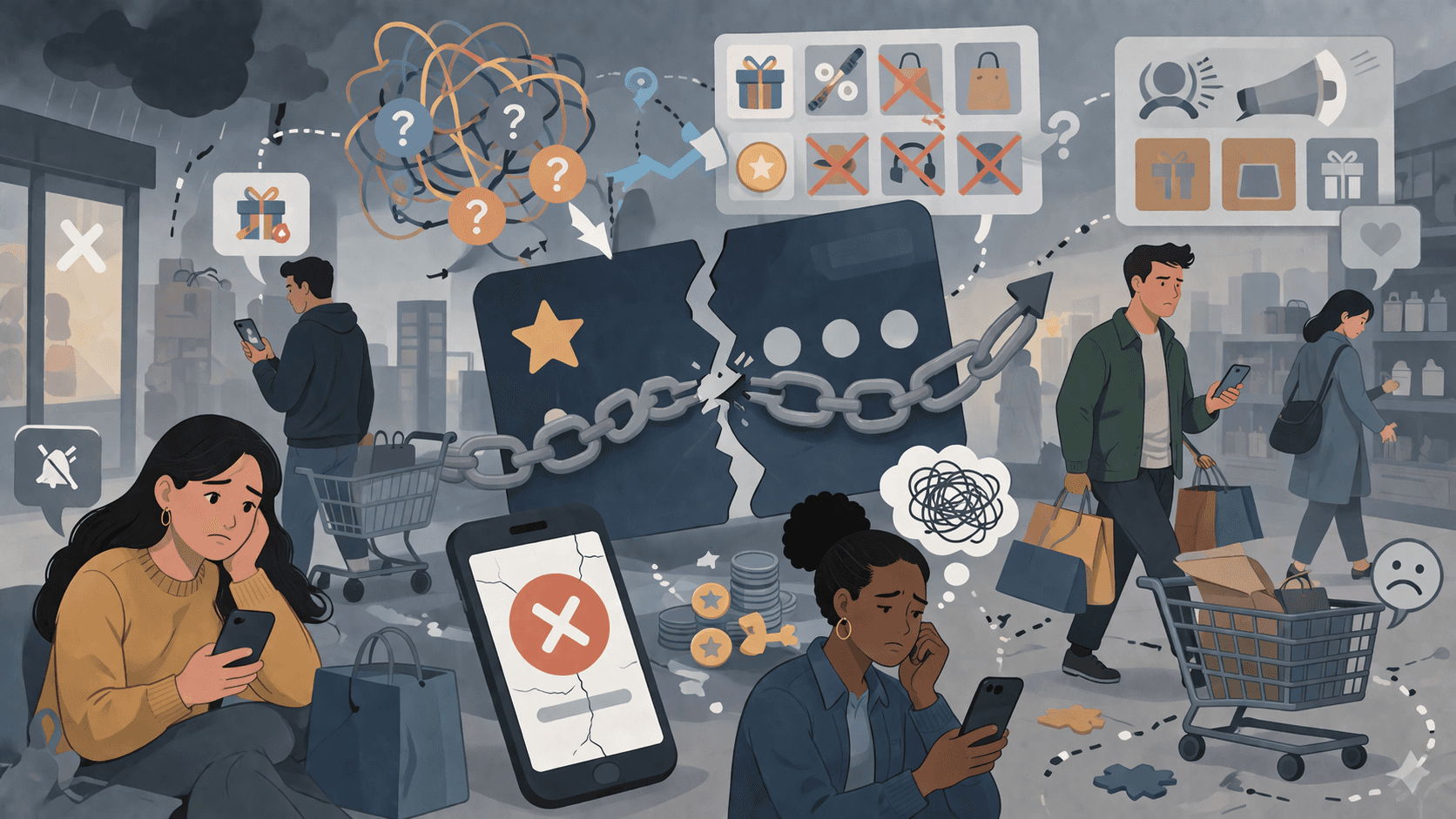
Loyalty programs have become a default growth lever for brands across retail, pharma, and e-commerce. On paper, they promise repeat purchases, stronger customer relationships, and higher lifetime value. In reality, many of them quietly underperform. If you’re here, chances are your program isn’t delivering what it was supposed to. You’ve invested in rewards, campaigns, and technology. Customers have signed up. But engagement feels flat, repeat purchases aren’t improving meaningfully, and leadership is starting to question the return. The problem isn’t loyalty as a concept. It’s how most programs are designed, measured, and executed.
If You Already Have a Loyalty Program, Here’s Why You’re Probably Here
Most leaders don’t search “why loyalty programs fail” out of curiosity. They search it when something feels off. Maybe your enrollment numbers look strong, but active participation is low. Maybe customers redeem offers but don’t come back unless incentivized again. Or maybe your CFO is asking a simple but uncomfortable question: what is this program actually contributing to revenue? This is a diagnostic moment. You’re not trying to build a loyalty program from scratch. You’re trying to understand what’s broken and how to fix it.
The Hard Truth: Most Loyalty Programs Are Built to Fail
You’re Rewarding Transactions, Not Building Relationships
Many programs are built around points, discounts, and cashback. While these can drive short term purchases, they don’t build real loyalty. Customers learn to associate your brand with incentives rather than value. When the rewards stop, so does the engagement.
Everyone Gets the Same Experience (And That’s the Problem)
A high value customer and a one time buyer often receive the same offers, messages, and rewards. This one size fits all approach ignores differences in behavior, preferences, and intent. Without personalization, your program becomes background noise.
Your Data Exists But It’s Not Working for You
Most organizations are sitting on vast amounts of customer data across CRM systems, transaction platforms, and marketing tools. But this data is often fragmented and underutilized. Instead of driving real time decisions, it ends up in dashboards and reports that don’t influence action.
You’re Measuring the Wrong Metrics
Enrollment numbers, points issued, and redemption rates can look impressive, but they don’t tell you whether your program is driving incremental revenue. Without clear attribution, it’s difficult to prove impact or justify continued investment.
Your Program Feels Like Every Competitor’s
If your loyalty program looks and behaves like every other program in the market, there’s no reason for customers to choose yours. Points based systems have become commoditized. Without differentiation, loyalty becomes transactional and easily replaceable.
Fraud and Abuse Are Quietly Eating Your Margins
From fake accounts to referral abuse, loyalty programs are often vulnerable to exploitation. These issues are rarely visible upfront but can significantly erode margins over time. What looks like engagement may actually be manipulation.
Execution Is Slower Than Your Customers Expect
Modern customers expect timely, relevant interactions. But many loyalty programs are constrained by legacy systems, manual processes, and heavy reliance on tech teams. By the time a campaign goes live, the opportunity has often passed.
The Real Cost of a Failing Loyalty Program
A poorly performing loyalty program doesn’t just fail to deliver results. It actively creates negative impact. There’s the obvious financial cost, discounts, rewards, and operational expenses that don’t translate into meaningful returns. Then there’s the opportunity cost of not retaining customers or increasing their lifetime value. Over time, it can also dilute your brand. If customers engage only when incentivized, your brand risks becoming synonymous with discounts rather than value. Internally, it creates inefficiencies. Teams spend time managing a system that isn’t delivering, while leadership loses confidence in loyalty as a growth lever.
What High Performing Loyalty Programs Do Differently
They Move From Transactions to Behavior Change
Instead of rewarding every purchase equally, high performing programs focus on influencing specific behaviors. This could include increasing purchase frequency, encouraging cross category buying, or driving app engagement. Rewards are tied to outcomes, not just actions.
They Personalize Every Interaction at Scale
Personalization is no longer optional. Leading programs use customer data to tailor offers, messages, and experiences to individual users. This goes beyond basic segmentation. It involves understanding intent, timing, and context to deliver relevance in every interaction.
They Turn Data Into Action, Not Reports
Data becomes valuable only when it drives decisions. Successful programs unify customer data across touchpoints and use it to enable real time engagement. Instead of looking at what happened last month, they act on what customers are doing right now.
They Build Differentiation Beyond Discounts
Discounts are easy to replicate. Experiences are not. Top performing programs incorporate exclusive access, gamification, tier based benefits, and experiential rewards that create emotional engagement. These elements make the program feel unique and valuable beyond monetary incentives.
They Bake Fraud Prevention Into the System
Rather than treating fraud as an afterthought, modern programs integrate detection mechanisms from the start. This includes rule based controls, anomaly detection, and continuous monitoring. This ensures that genuine engagement is rewarded while misuse is minimized.
They Enable Marketing Teams to Move Fast
Agility is a competitive advantage. High performing organizations empower marketing teams to launch, test, and optimize campaigns without heavy technical dependencies. This speed allows them to respond to customer behavior in real time and continuously improve performance.
The Shift from “Loyalty Program” to “Loyalty Ecosystem”
The most successful brands no longer treat loyalty as a standalone initiative. Instead, they integrate it across the entire customer journey. From acquisition to engagement to retention, loyalty becomes embedded in every interaction. It connects online and offline experiences, aligns with broader business goals, and evolves with customer expectations. This shift transforms loyalty from a marketing tool into a strategic growth engine.
What Happens When You Fix What’s Broken
Higher Retention and Repeat Purchases
When loyalty programs are aligned with customer behavior, they naturally drive repeat engagement. Customers have a reason to come back beyond discounts.
Improved Customer Lifetime Value
By increasing frequency, basket size, and engagement, brands can extract more value from each customer over time.
Reduced Discount Dependency
As programs become more experience driven and personalized, the reliance on heavy discounting decreases. This helps protect margins while maintaining engagement.
Stronger Customer Relationships Not Just Transactions
When customers feel understood and valued, their relationship with the brand deepens. This emotional connection is far more durable than transactional incentives.
Measurable ROI That Leadership Can Trust
With better data, attribution, and strategy, loyalty programs can clearly demonstrate their contribution to business outcomes. This builds confidence at the leadership level and secures long term investment.
A Quick Before vs After Snapshot
Before fixing the program, brands often see high enrollment but low engagement, rising costs without clear returns, and limited differentiation. After addressing the core issues, the same program can evolve into a system that drives meaningful behavior change, generates revenue, and strengthens customer relationships.
If Your Loyalty Program Isn’t Working, Here’s Where to Start
Step 1 Audit What’s Actually Driving or Not Driving Behavior
Look beyond surface level metrics. Identify which actions your program is influencing and where it’s falling short.
Step 2 Align Rewards With Business Outcomes
Every reward should serve a purpose. Whether it’s increasing frequency or improving retention, incentives must map directly to business goals.
Step 3 Invest in Data Unification and Intelligence
Break down silos and create a unified view of your customer. This is the foundation for effective personalization and decision making.
Step 4 Introduce Personalization Gradually
You don’t need to overhaul everything at once. Start with high impact segments and use learnings to scale personalization across the program.
Step 5 Evaluate Whether Your Current Platform Can Support This
Technology plays a critical role. If your current system limits agility, personalization, or data usage, it may be time to rethink your approach.
When It Makes Sense to Rethink Your Loyalty Strategy Entirely
Sometimes, incremental fixes aren’t enough. If your program consistently underperforms, lacks flexibility, or fails to align with business goals, a complete reset may be necessary. This is especially true when legacy systems prevent innovation or when customer expectations have outgrown your current capabilities.
Don’t Just Fix Loyalty Rebuild It as a Growth Engine
The goal isn’t to patch up a failing program. It’s to reimagine loyalty as a driver of sustainable growth. This requires a shift in mindset, from viewing loyalty as a cost center to treating it as a strategic asset that influences behavior, drives revenue, and strengthens customer relationships.
Loyalty Doesn’t Fail Outdated Strategies Do
Loyalty programs don’t fail because the concept is flawed. They fail because they’re built on outdated assumptions, limited data usage, and transactional thinking. For brands willing to rethink their approach, the opportunity is significant. A well designed loyalty ecosystem can move beyond discounts and become a powerful engine for retention, engagement, and growth. The question is no longer whether loyalty works. It’s whether your current approach is built for how customers behave today.
FAQs
Why do most loyalty programs fail to deliver ROI?
Because they focus on transactions instead of influencing customer behavior, rely heavily on discounts, and lack proper attribution models to measure incremental impact.
How can I tell if my loyalty program is underperforming?
Key signs include high enrollment but low engagement, stagnant repeat purchase rates, heavy discount dependency, and unclear contribution to revenue.
What is the biggest mistake brands make with loyalty programs?
Treating loyalty as a marketing tactic rather than a long-term customer strategy driven by data, personalization, and behavioral insights.
Can personalization really improve loyalty program performance?
Yes, personalized rewards and communication significantly increase engagement, retention, and customer lifetime value compared to generic campaigns.
When should a company consider replacing its loyalty platform?
When the current system limits personalization, slows down execution, cannot unify data, or fails to provide measurable ROI.
Related Blogs
Loyalty Program ROI Calculator: How to Measure the Real Impact of Your Loyalty Strategy
Most brands track loyalty metrics but fail to measure true ROI. A loyalty ROI calculator helps quantify incremental revenue, retention lift, and costs to drive data-driven growth.
Apr 10, 2026
When Loyalty Turns Against You: Understanding and Preventing Program Abuse
Loyalty program fraud hides behind strong engagement metrics, draining revenue through fake enrollments, points abuse, and manipulation. Detecting and preventing it is key to protecting margins, data accuracy, and long-term program growth.
Apr 2, 2026
Why Most Loyalty Programs Fail, and How AI Is Quietly Fixing Them
Most loyalty programs fail due to poor personalization and static execution. AI transforms them into dynamic systems that predict behavior, personalize in real time, and drive measurable retention, engagement, and ROI.
Apr 1, 2026