Why Most Loyalty Programs Fail, and How AI Is Quietly Fixing Them
Most loyalty programs fail due to poor personalization and static execution. AI transforms them into dynamic systems that predict behavior, personalize in real time, and drive measurable retention, engagement, and ROI.
Apr 1, 2026
The Loyalty Problem No One Talks About
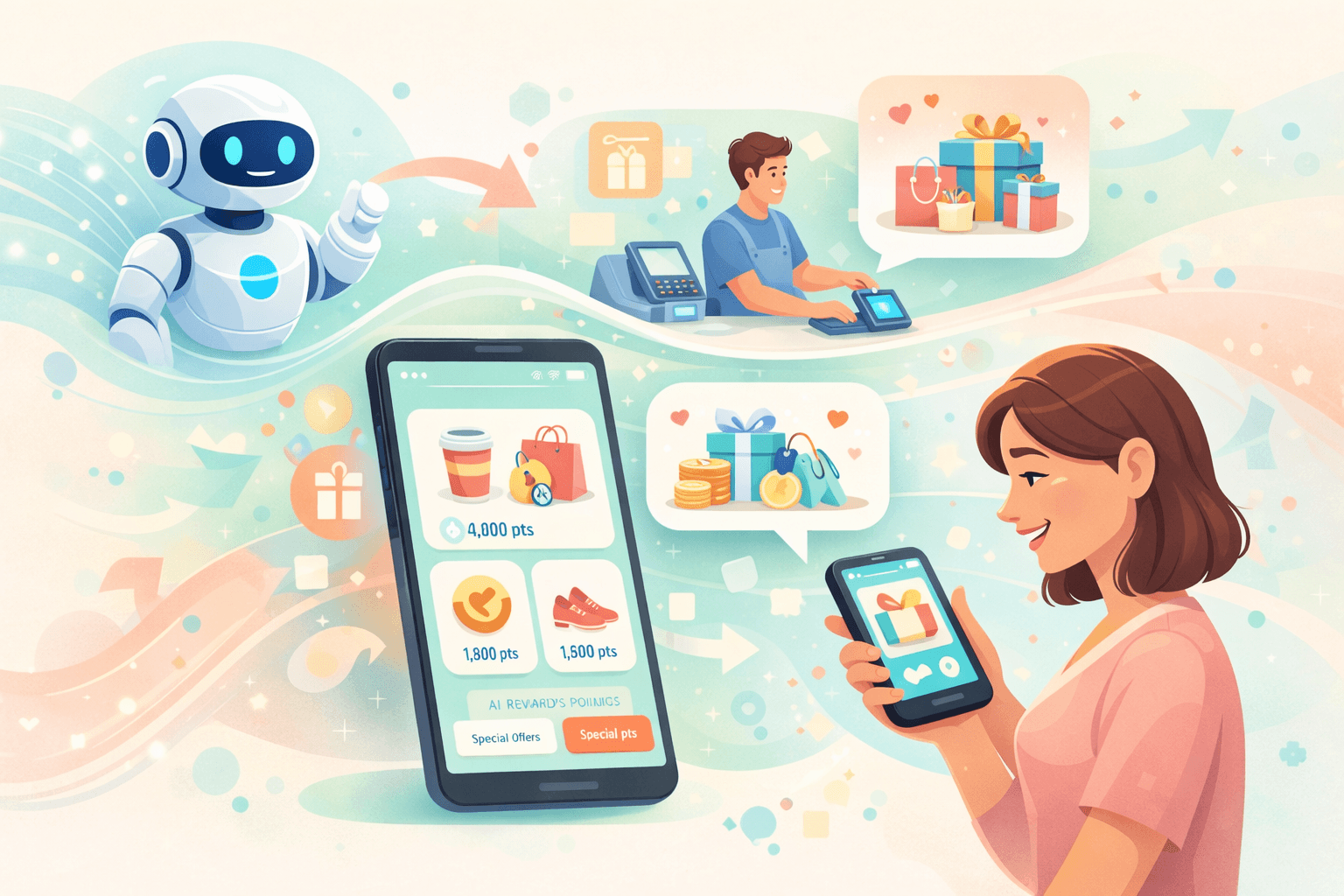
Loyalty programs were supposed to be the ultimate retention engine. For years, brands across retail and pharma invested heavily in points, rewards, and tier-based systems, believing that incentives alone could drive repeat behavior. But today, many of those same programs are under scrutiny. Customer acquisition costs are rising. Engagement rates are declining. And despite increasing investments in rewards, the actual business impact, incremental revenue, retention, lifetime value, often remains unclear. The issue isn’t that loyalty programs don’t work. It’s that most of them were built for a different era, one where customer expectations were lower, competition was limited, and personalization wasn’t the norm. Today’s customer expects relevance, immediacy, and consistency across every touchpoint. Static loyalty programs simply can’t keep up. That’s where AI enters the conversation, not as a buzzword, but as a response to a fundamentally broken system.
Where Loyalty Programs Start Breaking Down
High Sign-Ups, Low Engagement: What’s Going Wrong?
On paper, many loyalty programs look successful. Enrollment numbers are high, databases are growing, and points are being issued at scale. But a closer look tells a different story. A significant portion of users sign up once, and never engage again. Others interact sporadically, often only when incentivized heavily. The gap between membership and meaningful participation continues to widen. The reality is simple: joining a loyalty program is easy. Staying engaged requires sustained value, and most programs fail to deliver that consistently.
Personalization That Feels Impersonal
Many brands believe they are personalizing their loyalty programs. In reality, they’re segmenting. Customers are grouped into broad buckets, “high value,” “inactive,” “frequent buyers”, and offered similar incentives within those categories. While this may have worked earlier, today it feels generic. Customers can immediately tell when communication isn’t tailored to them. And when every brand claims to be “personalized,” the bar for relevance becomes even higher.
Data Is Everywhere, But Insight Is Nowhere
Most organizations aren’t short on data. They have transactional records, CRM systems, app behavior, and sometimes even in-store interactions. The problem is fragmentation. Data lives in silos, making it difficult to build a unified view of the customer. Even when insights are generated, they are often retrospective, telling teams what happened, not what to do next. Without actionable intelligence, data becomes an underutilized asset.
Campaigns Are Slow, Manual, and Reactive
Executing loyalty campaigns often involves multiple teams, manual approvals, and long turnaround times. By the time a campaign is launched: the customer context may have changed, the opportunity may have passed, and the message may no longer be relevant. This reactive approach limits the effectiveness of even well-designed programs.
Leadership Is Questioning ROI
Perhaps the biggest challenge is internal. CXOs and leadership teams are increasingly asking: Are we driving incremental behavior, or just rewarding existing customers? Is our loyalty program generating measurable returns? Could this budget be better allocated elsewhere? Without clear answers, loyalty programs risk being viewed as cost centers rather than growth drivers.
What Businesses Actually Mean When They Say “AI”
It’s Not About AI, It’s About Better Decisions at Scale
When leaders search for “AI in loyalty programs,” they’re not looking for algorithms. They’re looking for outcomes. In practical terms, AI represents: the ability to predict customer behavior, the ability to act in real time, the ability to personalize at an individual level, and the ability to reduce manual effort. At its core, AI is about making better decisions, faster and at scale.
From Static Programs to Living Systems
Traditional loyalty programs operate on fixed rules: spend X, get Y; earn points, redeem rewards. These systems are static. They don’t adapt unless someone manually updates them. AI-powered loyalty programs, on the other hand, are dynamic. They learn from every interaction, continuously refining how they engage customers. They don’t just execute, they evolve.
How AI Fixes What Loyalty Programs Get Wrong
Predicting What Customers Will Do Next (Before They Do It)
Instead of reacting to past behavior, AI enables brands to anticipate future actions. For example: identifying customers likely to churn, predicting purchase intent, and understanding lifecycle stages. This allows businesses to intervene at the right moment, before disengagement happens.
Personalization That Actually Feels Personal
AI moves beyond broad segmentation to individual-level decision-making. It considers purchase history, browsing behavior, engagement patterns, and contextual signals. The result is communication that feels relevant, not repetitive. Customers receive offers that align with their needs, at times when they are most likely to respond.
Turning Scattered Data into a Single Customer Story
AI systems can unify data across channels, creating a comprehensive customer profile. This includes online and offline transactions, app and website interactions, and campaign responses. With this unified view, brands can understand not just what customers did, but why they did it.
Campaigns That Run (and Improve) Themselves
AI reduces the dependency on manual campaign execution. Instead of planning campaigns weeks in advance, brands can automate segmentation, trigger real-time offers, and continuously optimize performance. Over time, the system learns which strategies work best, improving outcomes without additional effort.
Measuring What Actually Matters
AI enables more accurate attribution of business impact. Instead of tracking surface-level metrics, brands can measure incremental revenue, customer lifetime value (CLV), and retention improvements. This shifts the conversation from activity to outcomes.
What This Looks Like in Practice
A Smarter Retail Loyalty Journey
A customer browses products online but doesn’t complete a purchase. An AI-driven system detects intent and triggers a personalized incentive, tailored to that specific user’s preferences and behavior. The result: higher conversion rates and increased basket size.
Pharma: Driving Adherence, Not Just Purchases
In pharma, loyalty isn’t just about transactions, it’s about consistency. AI can identify patients at risk of dropping off, send timely reminders, and offer relevant support. This improves both engagement and long-term outcomes.
Omnichannel Consistency
Customers no longer differentiate between online and offline experiences. AI ensures that loyalty interactions remain consistent across stores, mobile apps, and websites. This creates a seamless experience, one that builds trust over time.
The Business Impact Leaders Actually Care About
Higher Retention Without Increasing Spend
AI optimizes how incentives are distributed, ensuring that rewards are used strategically, not excessively.
Increased Customer Lifetime Value (CLV)
By driving deeper engagement and more frequent interactions, AI contributes to sustained revenue growth.
Faster Execution, Lower Operational Load
Automation reduces the need for manual intervention, allowing teams to focus on strategy rather than execution.
Competitive Differentiation That’s Hard to Copy
AI systems improve over time, creating a compounding advantage that competitors can’t easily replicate.
From Loyalty Program to Revenue Engine
When powered by intelligence, loyalty programs evolve into predictable growth drivers, aligned with business outcomes.
What to Look for in an AI-Powered Loyalty Platform
Does It Go Beyond Basic Segmentation?
Look for predictive capabilities rather than rule-based logic.
Can It Act in Real-Time?
Insights are only valuable if they can be acted upon immediately.
Does It Unify Your Data or Add Another Layer?
The platform should simplify your ecosystem, not complicate it.
Can You Measure Incrementality Clearly?
Ensure that the platform focuses on business metrics, not just engagement metrics.
How Much Manual Effort Does It Remove?
True AI reduces workload, it doesn’t just repackage it.
Where to Start (Without Overhauling Everything)
Start With One High-Impact Use Case
Focus on areas like churn reduction and repeat purchase improvement. This allows for quick wins and measurable impact.
Fix Data Foundations First
Ensure that customer data is unified, accessible, and clean. Without this, AI cannot deliver accurate results.
Layer AI Into Existing Loyalty Programs
There’s no need to rebuild from scratch. AI can enhance existing systems incrementally.
Partner With a Platform That Understands Your Industry
Solutions like Loyalytics are designed specifically for sectors like retail and pharma, enabling faster implementation and more relevant outcomes.
Conclusion: Loyalty Doesn’t Need Reinvention, It Needs Intelligence
Loyalty programs aren’t failing because the concept is flawed. They’re failing because execution hasn’t evolved. Customers expect relevance. Businesses need measurable impact. Traditional systems struggle to deliver both. AI bridges that gap. It transforms loyalty from a static, reward-driven model into a dynamic, intelligence-driven system, one that adapts, learns, and improves over time. The future of loyalty isn’t about offering more. It’s about understanding better, and acting faster.
FAQs
1. How is AI in loyalty programs different from traditional CRM personalization?
Traditional CRM relies on static rules and segments, while AI continuously learns from customer behavior to make real-time, individualized decisions. It evolves with every interaction, making personalization dynamic rather than predefined.
2. Can AI improve loyalty without increasing discounting or reward costs?
Yes. AI focuses on optimizing who gets what and when, reducing unnecessary incentives. This leads to better outcomes with the same—or even lower—spend.
3. What kind of data is required to implement AI in loyalty programs?
At minimum: transactional data, customer profiles, and engagement data (app/web/email). The more unified the data, the more accurate the AI predictions.
4. How long does it take to see ROI from AI-driven loyalty initiatives?
Most brands start seeing measurable improvements (engagement, repeat purchases) within a few months, especially when applied to high-impact use cases like churn reduction or upsell optimization.
5. Is AI in loyalty programs only relevant for large enterprises?
No. While large enterprises benefit at scale, mid-sized brands can often see faster impact because of simpler data ecosystems and quicker implementation cycles.
Related Blogs
Loyalty Program ROI Calculator: How to Measure the Real Impact of Your Loyalty Strategy
Most brands track loyalty metrics but fail to measure true ROI. A loyalty ROI calculator helps quantify incremental revenue, retention lift, and costs to drive data-driven growth.
Apr 10, 2026

When Loyalty Turns Against You: Understanding and Preventing Program Abuse
Loyalty program fraud hides behind strong engagement metrics, draining revenue through fake enrollments, points abuse, and manipulation. Detecting and preventing it is key to protecting margins, data accuracy, and long-term program growth.
Apr 2, 2026
Choosing a Loyalty Program Platform? Here’s What Actually Matters (And What Doesn’t)
Choosing the right loyalty platform is key to driving real ROI. The right system enables personalization, unified data, and smarter decisions, turning loyalty from a cost center into a scalable growth engine.
Apr 1, 2026