The Real Costs of Not Having a Loyalty Program (And What It's Doing to Your Revenue)
Brands without loyalty programs face hidden revenue loss through low retention, rising CAC, and missed CLV. Over time, dependence on acquisition grows, making sustainable growth harder without a structured retention strategy.
Apr 1, 2026
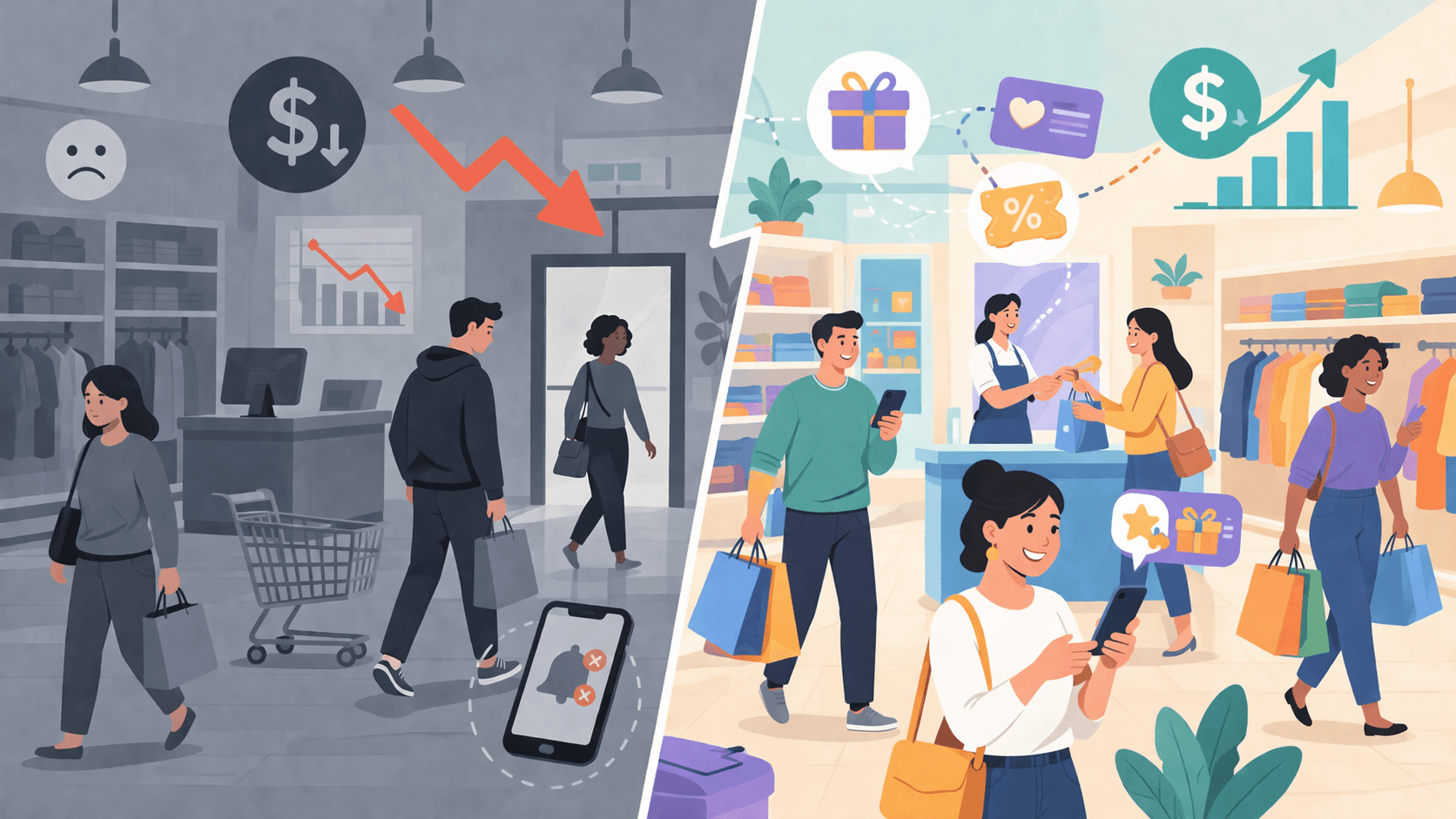
Most retail brands know they should have a loyalty program, yet many still operate without one, relying on promotions, paid ads, and seasonal spikes to drive revenue. What they fail to see is the steady, compounding impact happening in the background.
However, the real costs of not having a loyalty program are rarely visible on a P&L, but the loss from no loyalty program builds over time through lower retention, rising acquisition costs, and missed customer lifetime value (CLV).
Understanding the business cost of lacking a customer loyalty program is essential for sustainable growth. This guide explains the risks of not having a loyalty program and its long-term impact.
Why Most Brands Underestimate the Cost of Not Having Loyalty
Most brands underestimate the real costs of not having a loyalty program because they focus on upfront implementation costs instead of the hidden, compounding impact of churn and rising acquisition expenses. These disadvantages of not having a loyalty program create long-term inefficiencies that are often ignored.
1. Revenue Loss Is Hidden Inside Existing Sales Data
When a brand acquires a new customer and that customer never comes back, it registers as a completed transaction, not a loss. According to studies, existing customers generate 65% of a company's revenue, while new customers account for just 35%. Every one-time buyer who does not return is a revenue stream that simply never opened.
2. Growth Looks Stable, but Retention Is Silently Declining
Revenue can remain stable through constant acquisition, even while retention weakens. Loyalty is declining globally, and without a retention mechanism, this trend impacts your business faster.
3. Over-Reliance on Acquisition Masks Underlying Inefficiencies
When acquisition is the only growth lever, marketing teams chase volume, not value. Every inefficiency in the customer journey gets buried under new traffic. 44% of businesses prioritize customer acquisition, while only 18% prioritise retention. This imbalance is one of the clearest indicators that brands are operating without a loyalty strategy.
Lost Revenue from Low Customer Retention
The real costs of not having a loyalty program become most visible in customer retention. The loss from no loyalty program directly impacts repeat purchases, frequency, and long-term customer value.
1. One-Time Buyers Instead of Repeat Customers
Without a loyalty program, most customers buy once and move on. Brands without retention mechanisms have no way to re-engage these buyers. However, the repeat customers spend 3x more per visit compared to first-time shoppers. Even converting a fraction of one-time buyers into loyal customers would represent a meaningful revenue uplift.
2. Lower Purchase Frequency Across Existing Users
Even customers who return occasionally don't purchase as frequently without a structured engagement mechanism. Loyalty programs directly solve this, with members generating 12–18% more incremental revenue annually than non-members, primarily through higher purchase frequency and larger basket sizes.
3. Missed Opportunity to Increase Customer Lifetime Value (CLV)
CLV is the most important long-term metric in retail. Without loyalty, brands leave it to chance. The data tells a compelling story that repeat customers spend 67% more in their third year than in their first six months. Without a loyalty program, the majority of customers never reach that window. Brands that don't invest in loyalty are, by definition, capping their own CLV potential.
Increased Customer Acquisition Costs (CAC)
One of the biggest business costs of lacking a customer loyalty program is the continuous rise in acquisition spend. The real costs of not having a loyalty program are reflected in increasing CAC and dependency on paid channels.
1. Constant Need to Acquire New Customers to Replace Churn
Every customer you lose is a customer you'll have to pay to replace. Acquiring a new customer costs 5 to 25 times more than retaining an existing one. For brands without retention infrastructure, this isn't an occasional cost; it's a structural one baked into every quarter.
2. Rising Marketing Spend with Diminishing Returns
Paid acquisition has never been more expensive. Customer acquisition costs have risen 60% over the last five years. At the same time, digital platforms continue to reduce targeting precision. Brands without loyalty programs are the most exposed to this trend; they have no retention engine to offset the rising cost of new customer acquisition.
3. No Mechanism to Convert First-Time Buyers into Loyal Customers
A new customer is an acquisition investment, but the return only materializes if that customer comes back. Without a loyalty program, brands have no systematic way to convert first purchases into ongoing relationships. That makes every acquisition cost a sunk cost rather than an investment.
Missed Opportunities to Influence Customer Behavior
The risks of not having a loyalty program extend beyond retention into customer behavior. The real costs of not having a loyalty program include losing control over purchase patterns and engagement.
1. No Control Over Purchase Frequency or Basket Size
Loyalty programs are one of the most direct tools for nudging customer behaviour. Moreover, without a loyalty program, brands have no structured way to increase basket size or accelerate purchase cycles. Promotions and discounts can move the needle short-term, but they don't build behaviour.
2. No Ability to Guide Customers Toward High-Margin Products
Loyalty programs, especially those built on first-party data and predictive analytics, let brands direct engagement toward the products and categories that matter most commercially. Without that infrastructure, promotional strategy defaults to discounting broadly rather than targeting precisely. Reports suggest that top-performing loyalty programs boost revenue by 15–25% annually by increasing both purchase frequency and basket size. Brands without loyalty programs simply don't have that lever.
3. No Engagement Beyond Transactions
The most valuable customer relationships aren't purely transactional. Loyalty programs create touchpoints between purchases through rewards updates, personalized offers, and exclusive access, which keep a brand relevant in the customer's decision set. Without this, brands only exist for customers when there's a need or a promotion. That's a fragile position in any competitive market. Data indicates that businesses not engaging their customers are 54% more likely to lose them to a competitor.
What a Loyalty Program Actually Fixes
Understanding the real costs of not having a loyalty program is only part of the equation. The solution lies in addressing the disadvantages of not having a loyalty program through structured retention strategies.
1. Drives Repeat Purchases and Increases Customer Lifetime Value
A loyalty program gives customers a reason to return and a reason to spend more. Retail brands with well-structured loyalty programs see repeat purchase rates jump 20–30%. Well-designed programs consistently deliver a 25% increase in CLV through a combination of higher frequency, larger basket sizes, and longer customer tenure. This is the basis of predictable and measurable revenue growth, something no promotional calendar can replicate.
2. Reduces Dependency on Paid Acquisition and Discounts
Every loyal customer who refers a new buyer or who returns without a promotional trigger reduces the effective CAC. The compounding effect of word-of-mouth and organic return visits creates a lower-cost growth channel that acquisition spend alone can't achieve.
3. Enables Personalized Engagement at Scale
A loyalty program is also a first-party data engine. Every transaction, redemption, and interaction builds a richer customer profile, enabling personalized journeys that move customers toward higher-value behaviours. Reports suggest that 68% of loyalty program members feel brands better understand their preferences, which drives deeper engagement and spend. In an omnichannel engagement environment, this level of data-driven personalization is a significant competitive advantage.
4. Creates Predictable and Measurable Revenue Growth
Unlike campaign-driven spikes, loyalty-driven revenue is structural. It doesn't reset to zero after a promotion ends. 90% of loyalty program owners report positive ROI, with the average program delivering 4.8x returns on investment. For retail leadership teams focused on sustainable growth, that's a compelling case.
Conclusion
The real costs of not having a loyalty program include rising CAC, lower retention, and missed CLV growth. The risks of not having a loyalty program continue to compound over time, increasing the business cost of lacking a customer loyalty program. This loss from no loyalty program highlights why businesses need a loyalty program to drive sustainable growth and profitability.
Build a loyalty program that drives real revenue, not just engagement. With Loyalytics, turn customer data into repeat purchases, higher CLV, and measurable growth.
FAQs
What happens if a business does not have a loyalty program?
Without a loyalty program, businesses rely heavily on acquisition to drive revenue, leading to higher customer acquisition costs (5–25 times more than retaining existing ones), increased churn, and missed opportunities for personalized marketing. This results in dependence on expensive advertising for repeat visits, lower repeat purchase rates, and limited growth in customer lifetime value.
How does a lack of loyalty impact customer retention?
Customer retention drops significantly without a structured loyalty mechanism. Customers have no incentive to return after their first purchase, and brands have no systematic way to re-engage them.
Does not having a loyalty program increase acquisition costs?
Yes, directly. When you can't retain customers, you must constantly replace them through paid acquisition. A loyalty program reduces this pressure by converting existing customers into repeat buyers and brand advocates who bring in new customers organically.
How do loyalty programs improve profitability?
Loyalty programs improve profitability through multiple mechanisms: they increase purchase frequency, grow basket size, raise CLV, and reduce the need for blanket discounting.
What revenue is lost without a loyalty strategy?
The revenue lost without a loyalty strategy includes: repeat purchases that never happen, CLV that never compounds, referrals that never occur, and the incremental spend that loyalty members generate over non-members.
How do loyalty programs reduce dependency on discounts?
Discounts trigger purchase but don't build loyalty. Loyalty programs shift the value exchange from price to recognition; customers return for exclusive access, personalized rewards, and status, not just lower prices. This allows brands to protect margin while still driving repeat purchase behaviour. Over time, loyalty members become less price-sensitive and more likely to pay full price.
Why is customer data important for retention?
Customer data powers personalized engagement, the single most effective driver of retention. Without data, brands send generic communications that don't resonate. First-party data collected through loyalty programs enables brands to predict churn, personalize offers, and guide customers toward high-value behaviours.
Can businesses grow without loyalty programs?
Yes, businesses can grow without loyalty programs by focusing on exceptional customer service, product quality, and building community. Brands relying purely on acquisition face rising CAC, flat or declining CLV, and increasing vulnerability to competitors with stronger retention infrastructure.
How do loyalty programs impact customer lifetime value (CLV)?
Loyalty programs significantly increase CLV by boosting retention rates, raising average order values (AOV), and increasing purchase frequency.
What are the long-term risks of not investing in loyalty?
The long-term risks of not having a loyalty program include over-dependence on paid acquisition, rising CAC with no offset, capped CLV, lack of first-party data for personalization, and increasing reliance on margin-eroding discounts, making brands more vulnerable to competitors focused on retention.
Related Blogs
Loyalty Program ROI Calculator: How to Measure the Real Impact of Your Loyalty Strategy
Most brands track loyalty metrics but fail to measure true ROI. A loyalty ROI calculator helps quantify incremental revenue, retention lift, and costs to drive data-driven growth.
Apr 10, 2026

When Loyalty Turns Against You: Understanding and Preventing Program Abuse
Loyalty program fraud hides behind strong engagement metrics, draining revenue through fake enrollments, points abuse, and manipulation. Detecting and preventing it is key to protecting margins, data accuracy, and long-term program growth.
Apr 2, 2026
Why Most Loyalty Programs Fail, and How AI Is Quietly Fixing Them
Most loyalty programs fail due to poor personalization and static execution. AI transforms them into dynamic systems that predict behavior, personalize in real time, and drive measurable retention, engagement, and ROI.
Apr 1, 2026