Loyalty Program Members Inactive? How to Re-Engage Them and Drive Repeat Revenue
Loyalty programs lose value when members go inactive. Personalized, timely re-engagement drives retention and repeat revenue.
Apr 1, 2026
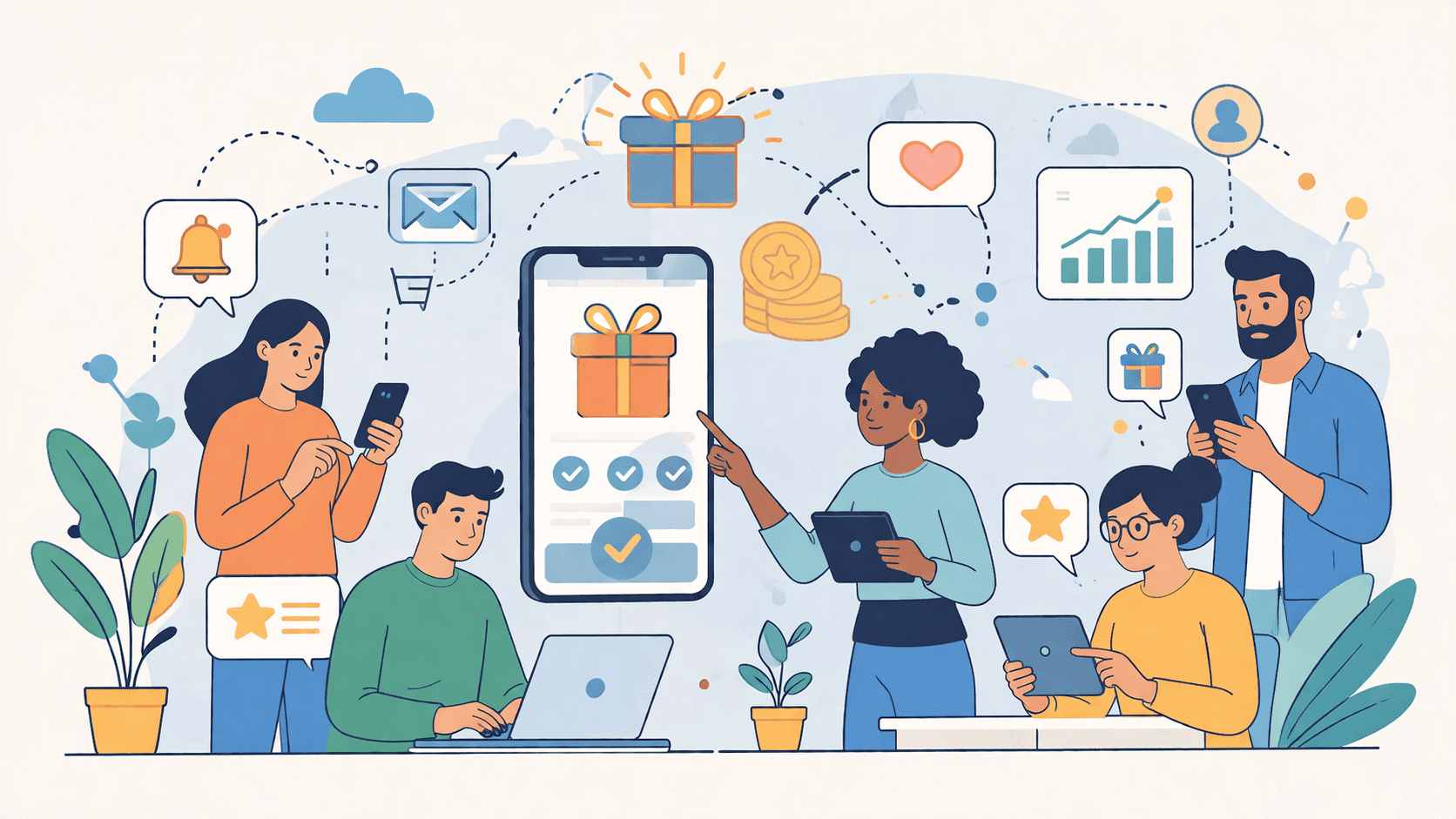
Many loyalty programs see members sign up, earn points, maybe redeem once, then go inactive. These are not lost customers. They joined with intent but did not find enough reason to return. The disconnect between sign-up and sustained engagement is where value is lost.
Re-engaging loyalty program members is one of the highest ROI opportunities, with research showing a 5% retention lift can increase profits by 25–95%. This makes re-engaging loyalty program members a critical growth lever, not just a marketing strategy.
This guide on how to re-engage your loyalty program members explains how to identify at-risk users and execute campaigns that drive repeat engagement.
Why Loyalty Members Become Inactive
Before you can understand how to re-engage inactive loyalty members, you need to identify what causes disengagement. The reasons are more predictable than most brands realize.
1. Drop in Engagement After Initial Purchase or Reward
The first redemption is a dopamine hit. Members feel rewarded, their expectations are validated, and they are primed for the next interaction. But if nothing follows, no nudge, no progression, no next goal, the momentum dies.
2. Lack of Personalized Offers and Communication
Generic campaigns and one-size-fits-all rewards quickly lose effectiveness. Customers disengage when offers do not reflect their purchase behavior or interests. A lack of personalization makes the program feel irrelevant, leading to lower engagement and eventually inactivity.
3. No Urgency or Reason to Return
Programs that require too much effort for too little value often fail. If rewards take too long to earn or there is no clear milestone to work toward, members lose motivation. Without urgency or visible progress, the program feels passive and easy to ignore.
4. Irrelevant or Excessive Messaging
There is a fine line between staying top-of-mind and becoming noise. Brands that over-communicate, such as sending three emails a week or daily push notifications, train members to ignore them. Equally damaging is under-communication, where members forget they even belong to your program. Both extremes lead to inactivity.
How to Identify At-Risk and Inactive Members
Accurate segmentation is the basis of customer loyalty re-engagement and determines how effectively you can re-engage loyalty program members.
1. Defining Inactivity Based on Purchase Behavior
Inactivity thresholds vary by category and usage patterns. A member can be considered at risk if they show no activity for 30 to 90 days, depending on the purchase cycle. Define inactivity relative to your category’s natural behavior, typically 1.5x to 2x the average interaction or purchase interval.
Track signals beyond transactions as well, such as login frequency, email opens, feature usage, and engagement with communications. A member who is still browsing or opening emails is very different from one who has gone completely inactive.
2. Segmenting Users by Value and Engagement Level
Not all inactive members should be treated the same. Use RFM (Recency, Frequency, Monetary) analysis along with engagement data to segment your audience:
High-value inactive members who previously contributed significant revenue
Mid-value members are showing declining engagement
Low-value or one-time users with minimal interaction
This segmentation helps tailor messaging, incentives, and channels more effectively.
3. Prioritizing High-Value Inactive Customers
Use customer lifetime value and engagement trends to prioritize outreach. Predictive scoring models can identify members who are most likely to churn and those with the highest potential value if re-engaged.
This ensures your efforts and budget are focused on members who can deliver the highest return when reactivated.
Key High-Impact Re-Engagement Triggers
Timing is everything. The most effective re-engagement campaigns are driven by behavioral signals and personalized triggers rather than fixed calendar schedules.
1. Points Expiry and Reward Reminders
Points expiry is one of the most powerful re-engagement levers. When members see that their points are about to expire, it creates urgency and pushes immediate action. Messages like “Your 3,500 points expire in 14 days” can reactivate dormant users. The key is to send reminders in phases, such as 30 days, 14 days, and 7 days before expiry.
2. Breaks in Purchase Cycles
When a customer deviates from their usual purchase or usage pattern, it signals early disengagement. Automated triggers based on expected consumption cycles or usage frequency allow brands to intervene at the right moment. Reaching a member when they slightly drift from their normal behavior is far more effective than waiting until they are completely inactive.
3. Post-Campaign or Seasonal Drop-Offs
Customer activity often spikes during promotions or seasonal campaigns and drops afterward. This pattern is predictable. Setting up follow-up journeys after campaigns helps maintain momentum and prevents customers from becoming inactive once the promotion ends.
Re-Engagement Strategies That Actually Work
Effective re-engagement depends on several factors, and the most successful loyalty program re-engagement strategies combine behavioral data, targeted incentives, and simple execution to bring inactive members back into the engagement cycle.
1. Personalized Win-Back Offers Based on Past Behavior
The most effective re-engagement offers feel tailored to the individual. Use purchase history and preferences to design relevant incentives. A customer who frequently buys from a specific category should receive an offer aligned to that interest, not a generic discount. Go beyond broad segmentation. Personalized campaigns can increase engagement rates by up to 80%, as consumers are significantly more likely to respond to relevant, behavior-driven offers. Reference past behavior directly to make communication more meaningful. This level of personalization increases both reactivation rates and long-term retention.
2. Urgency-Driven Campaigns (Limited-Time Rewards)
Creating urgency is critical to driving action. Limited-time rewards such as bonus points, exclusive discounts, or expiring benefits encourage immediate response. Highlight unused or expiring points to remind members of the value they are leaving behind. Time-bound campaigns, such as 7-day or 24-hour offers, help reduce decision delays and increase conversions.
3. Progress-Based Incentives to Restart Engagement
Show members how close they are to their next reward or tier. Messages that highlight progress toward a goal encourage completion and renewed engagement. For members who have been inactive longer, consider offering small bonus points or temporary tier upgrades to make rewards feel achievable again. This creates a clear and immediate reason to return.
4. Experience-Led Rewards Instead of Just Discounts
Moving beyond discounts, experience-led rewards create stronger emotional engagement. Early access, exclusive perks, or curated experiences offer value that goes beyond price reductions. Adding surprise elements such as unexpected bonus points or limited-time VIP status can reignite interest and make the program feel rewarding rather than purely transactional.
How to Measure Re-Engagement Success
Measuring success is essential to improve loyalty program engagement and understand whether your efforts to re-engage loyalty program members are driving real business impact.
1. Reactivation Rate
This measures the percentage of inactive members who return to take a meaningful action, such as making a purchase, redeeming points, or logging in after a campaign. High-performing re-engagement campaigns typically achieve reactivation rates between 14% and 29%, depending on targeting and timing effectiveness. It is the primary indicator of campaign effectiveness and should be tracked against historical benchmarks.
2. Incremental Revenue from Re-Engaged Users
Reactivation alone is not enough. The key question is how much additional revenue is generated compared to a control group that was not targeted.
Measure:
Revenue per reactivated member
Cost of incentives and campaign execution
Net incremental profit
Success is achieved when the revenue and long-term customer value generated exceed campaign costs.
3. Repeat Purchase Behavior After Reactivation
A member who makes one post-reactivation purchase and disappears again is not truly re-engaged. Track second and third purchase rates within 60–90 days of reactivation to determine whether your program is creating genuine re-engagement or just one-time responses to incentives. This metric directly connects to CLV improvement and is the strongest signal that your re-engagement strategy is working.
Where Loyalty Programs Go Wrong (and How to Avoid It)
Common reasons loyalty program members become inactive, and the mistakes to avoid, center on low perceived value, excessive complexity, and poor communication. The average consumer is part of multiple loyalty programs but actively engages with only a few, making it critical to avoid these pitfalls.
1. Treating All Inactive Users the Same
Sending the same win-back message to all inactive members ignores differences in value and behavior. High-value customers, mid-tier users, and one-time buyers require different strategies. Lack of personalization reduces relevance and weakens engagement.
2. Delayed Re-Engagement Efforts
Waiting too long to act significantly reduces the chances of reactivation. When members remain inactive for extended periods, they lose connection with the brand. Early intervention within 30 to 60 days of declining activity improves success rates.
3. Over-Reliance on Discounts
Constant discount-driven campaigns reduce perceived value and train customers to wait for offers. If every re-engagement campaign defaults to "here's 20% off," you are conditioning your members to disengage and wait for the deal. A balanced approach that includes personalized rewards, experiences, and progress-based incentives is more sustainable.
4. No Post-Reactivation Strategy
Winning a customer back is only half the battle. Without a structured onboarding sequence after reactivation, a welcome back message, next goal milestone, and engagement habit formation, you are likely to see the same member go quiet again within 60–90 days. Build the post-reactivation journey before you launch the re-engagement campaign.
Conclusion
Re-engagement is not just about bringing members back; it is about sustaining their value over time. A structured approach to how to re-engage your loyalty program members combines personalization, timing, and clear incentives to drive repeat behavior. With Loyalytics, you can turn inactive users into high-value customers through data-driven engagement, improved retention, and measurable ROI.
FAQs
What is loyalty program re-engagement?
Loyalty program re-engagement is the process of identifying inactive or disengaged members and implementing targeted strategies to bring them back into active participation through purchases, app usage, point redemptions, or other qualifying behaviors. It involves personalized communication, exclusive incentives such as bonus points or discounts, and data-driven campaigns to rebuild engagement and improve retention.
Why do loyalty members become inactive?
Members become inactive due to a combination of low perceived value and poor experience. Slow reward accumulation, irrelevant or generic offers, and complex redemption rules reduce motivation to participate. Programs that lack personalization or have outdated user experiences further weaken engagement, while expiring points and competing loyalty programs accelerate drop-off.
How do you identify inactive customers?
Start by defining inactivity based on your category’s purchase cycle and customer behavior, typically using time-based thresholds such as 30 to 90 days or 1.5x to 2x the average inter-purchase interval. Combine this with engagement signals like last purchase date, email opens, app logins, and stagnant points balance.
What are the best re-engagement strategies?
The most effective strategies combine behavioral personalization (offers tailored to past category and purchase behavior), urgency mechanics (expiring points, time-limited rewards), progress-based incentives (milestone nudges), and experience-led rewards. The right mix depends on your member segment and the depth of inactivity.
When is the right time to re-engage users?
The optimal window to re-engage loyalty program users is typically 30 to 90 days after their last purchase or visit, when early signs of inactivity begin to appear. Triggers such as declining purchase frequency, abandoned carts, or expiring points indicate the right moment to act. The earlier you intervene with personalized, time-sensitive offers, the lower the reactivation cost and the higher the success rate.
How can personalization improve reactivation?
Personalization improves reactivation by making offers feel relevant to the individual member's specific behavior, preferences, and history. Personalized campaigns consistently outperform generic mass campaigns in both open rates and conversion, because relevance drives action in a way that generic incentives cannot.
Which channels work best for re-engagement?
The most effective channels for re-engagement in loyalty programs are SMS or WhatsApp, personalized email, and mobile app push notifications, as they enable direct and timely communication with inactive members. Campaigns perform best when they deliver personalized, time-sensitive incentives within 60 to 90 days of inactivity, using a coordinated omnichannel approach to maximize reach without overwhelming the user.
How do you measure re-engagement success?
Measure re-engagement success by focusing on behavioral and financial impact rather than vanity metrics. Track key indicators such as reactivation rate, incremental revenue from re-engaged members compared to a control group, and repeat purchase rate within 60 to 90 days after reactivation. Success is reflected in increased active participation, higher reward redemption, and improved customer lifetime value.
How can you avoid over-discounting?
Build a re-engagement toolkit that goes beyond blanket discounts by focusing on value-added rewards such as exclusive access, personalized experiences, and tiered benefits. Use data to target discounts only for specific high-value or high-risk segments where the incremental return justifies the cost. Incorporate non-monetary rewards and frequency-based incentives like “buy 5 get 1” to drive engagement without eroding margins, and use testing to compare the effectiveness of discount versus non-discount approaches.
How does re-engagement impact customer lifetime value?
Effective re-engagement directly improves customer lifetime value by converting dormant users into repeat buyers and increasing both purchase frequency and average order value. Even a small improvement in retention, such as 5%, can drive profit increases of 25% to 95%. By bringing inactive members back and sustaining their engagement, brands extend the customer relationship and achieve higher long-term value.
Related Blogs

Loyalty Program ROI Calculator: How to Measure the Real Impact of Your Loyalty Strategy
Most brands track loyalty metrics but fail to measure true ROI. A loyalty ROI calculator helps quantify incremental revenue, retention lift, and costs to drive data-driven growth.
Apr 10, 2026

When Loyalty Turns Against You: Understanding and Preventing Program Abuse
Loyalty program fraud hides behind strong engagement metrics, draining revenue through fake enrollments, points abuse, and manipulation. Detecting and preventing it is key to protecting margins, data accuracy, and long-term program growth.
Apr 2, 2026
Why Most Loyalty Programs Fail, and How AI Is Quietly Fixing Them
Most loyalty programs fail due to poor personalization and static execution. AI transforms them into dynamic systems that predict behavior, personalize in real time, and drive measurable retention, engagement, and ROI.
Apr 1, 2026