Omnichannel Retail Indonesia: Strategy, Benefits & Market Leaders
A practical guide to omnichannel retail in Indonesia, covering strategy, benefits, challenges, and market leaders driving unified commerce.
Feb 12, 2026
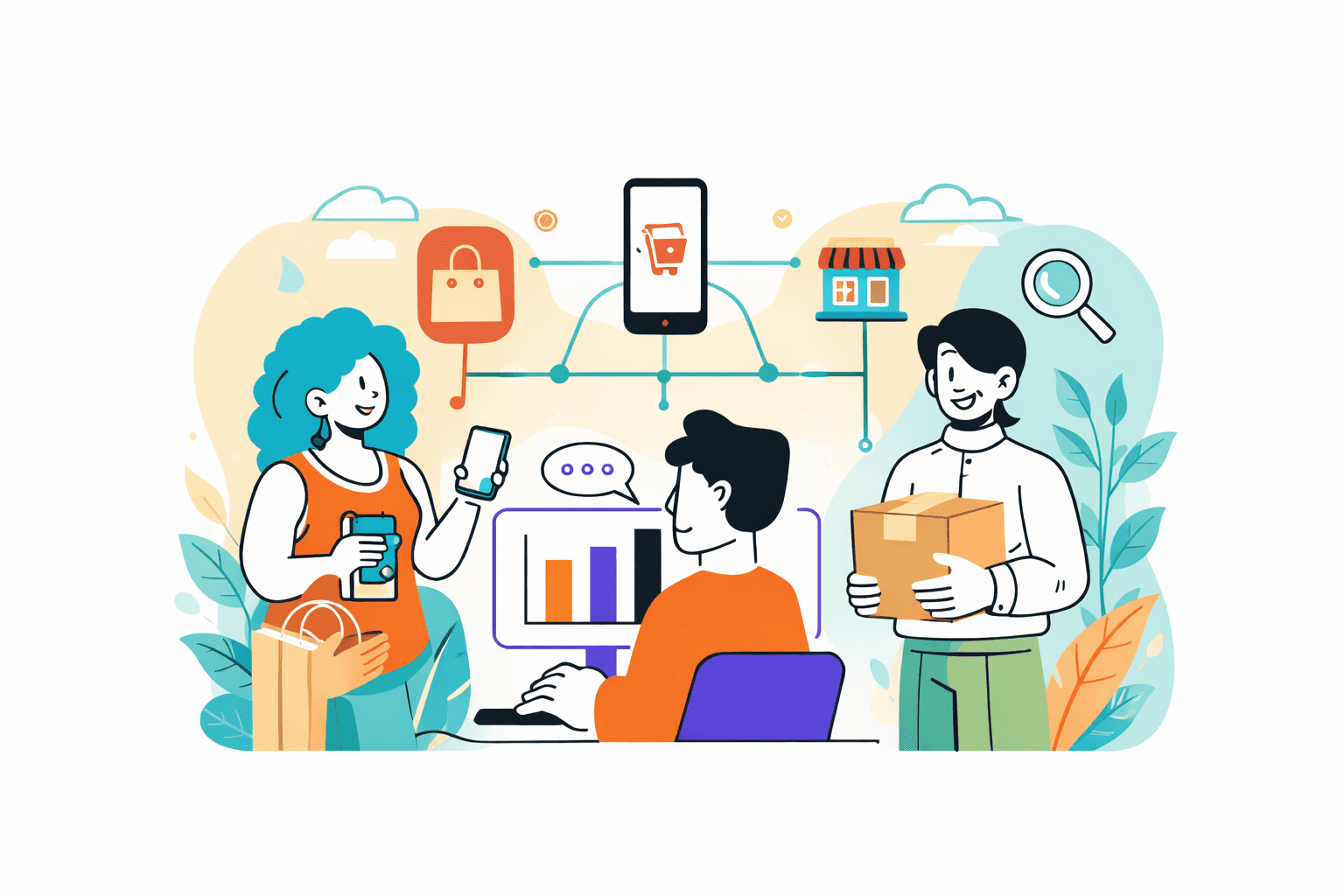
Indonesia's retail sector sits at a turning point. With internet penetration reaching 79.5% in 2024 and over 70% of online transactions happening via smartphones, customers expect consistent experiences whether they browse online, shop in-store, or interact on social media.
Yet many retailers still operate with fragmented systems. POS data stays separate from CRM records. Loyalty points earned in-store don't sync with online accounts. Customer profiles remain incomplete.
Omnichannel retail in Indonesia is no longer optional. Retailers who fail to connect their channels risk losing customers to competitors who offer a unified experience. This guide breaks down what works, who's doing it well, and how you can build a scalable omnichannel retail strategy in Indonesia.
What Is Omnichannel Retail in the Indonesian Context?
Omnichannel retail means connecting every customer touchpoint into a single, unified system. In Indonesia, this goes beyond linking e-commerce with physical stores.
It includes marketplace presence on Shopee and Tokopedia, social commerce through TikTok Shop and Instagram, mobile apps, WhatsApp communications, and convenience store partnerships. Every interaction feeds into one customer profile.
For Indonesian retailers, this matters because consumers move between channels rapidly. A customer might discover a product on TikTok, check prices on a marketplace, visit a physical store to test it, and complete the purchase through a mobile app. Each step should feel connected.
Why Omnichannel Retail Is Critical in Indonesia Today
Mobile-First Consumer Base
Indonesia is a mobile-first market. Smartphone adoption is projected to reach 94% by 2028, with the average Indonesian spending six hours daily on mobile devices. E-commerce platform apps are the preferred choice for 67% of online shoppers.
Retailers who don't optimize for mobile across all touchpoints miss a significant portion of their audience.
Marketplace Dependency vs Owned Channels
Marketplaces hold 70% of Indonesia's e-commerce market share. While Shopee, Tokopedia, and TikTok Shop drive traffic, they also control customer data and charge fees that cut into margins.
Smart retailers use marketplaces for acquisition but build owned channels such as apps, websites, and physical stores for retention. An omnichannel approach enables this transition without losing customers.
Rising Customer Expectations
Live shopping now accounts for 6 out of 10 purchases, and half the population uses social media to discover products. Customers expect personalized offers, real-time inventory visibility, and flexible fulfillment options like click-and-collect.
Pain Points Indonesian Retailers Face:
Disconnected POS and CRM systems
No unified customer profile across channels
Loyalty points are not synced between online and offline
Inability to measure omnichannel ROI accurately
Omnichannel Retail Strategy in Indonesia: What Actually Works
Unified Customer Data Platform (CDP)
A CDP collects customer data from every channel (store visits, online browsing, app usage, marketplace transactions) and builds a single profile. This offers segmentation, personalized messaging, and accurate attribution.
Without unified data, you cannot know which channels drive conversions or which customers have the highest lifetime value.
Integrated Loyalty Across Channels
Customers earn and redeem points regardless of where they shop. Physical store purchases add points visible in the app. Online orders qualify for in-store perks. This creates stickiness and encourages cross-channel behavior.
POS + E-commerce + CRM Integration
Your point-of-sale system, e-commerce platform, and CRM must communicate in real time. When a customer buys in-store, their online profile updates immediately. When they browse online, store staff can access their preferences.
Blibli's "Blibli InStore" and "Click & Collect" features allow customers to purchase online and pick up at designated locations, with inventory synced across all channels.
Personalization at Scale
Use purchase history, browsing behavior, and demographic data to send relevant offers. A customer who buys skincare shouldn't receive promotions for electronics. Segment by recency, frequency, and monetary value to prioritize high-value customers.
Marketplace-to-Owned Channel Conversion
Offer incentives for marketplace customers to download your app or visit your store. Exclusive app-only discounts, loyalty programs unavailable on marketplaces, and superior after-sales service give customers a reason to shift.
Benefits of Omnichannel Retailing in Indonesia
Increased Customer Lifetime Value
Customers who shop across multiple channels spend more over time. Research shows omnichannel shoppers spend up to 4% more in-store and 10% more online compared to single-channel buyers.
When Indonesian consumers can browse on social media, compare prices in your app, and complete purchases in-store while being recognized as the same customer, they develop stronger brand affinity and return more frequently.
Higher Average Order Value
This cross-channel behavior also drives larger basket sizes. Shoppers researching products online often purchase additional items when visiting physical stores. Personalized recommendations based on unified browsing and purchase data create natural upsell opportunities, leading to measurable lifts in average transaction value.
Stronger Customer Retention
Beyond spending more, omnichannel customers stay longer. Unified loyalty programs and consistent experiences reduce churn by removing friction. When customers earn and redeem points across all channels without barriers, they have less reason to switch to competitors.
Indonesian shoppers particularly value the flexibility to move between online and offline without restarting their brand relationship.
Improved Marketing ROI
Consolidated customer data from apps, websites, and stores enables accurate conversion attribution. You can identify which campaigns drive store visits, which channels convert best, and where to allocate budget. Data-driven personalization allows for targeted offers based on actual purchasing behavior, reducing wasted spend on irrelevant promotions.
Better Inventory & Demand Planning
Real-time inventory integration across digital and physical touchpoints helps retailers reduce stock shortages and minimize excess inventory. Online browsing patterns serve as demand signals for in-store replenishment, preventing lost sales while reducing carrying costs.
Operational Efficiency & Competitive Edge
These improvements compound into overall operational gains. A unified system reduces manual errors and enables faster order fulfillment, which is critical for Indonesia's fast-moving retail market.
Retailers who adopt omnichannel operations meet modern consumer expectations and gain clear advantages over competitors running disconnected channels.
Top Omnichannel Retailers in Indonesia
Several top omnichannel retailers in Indonesia have set benchmarks worth studying:
Blibli: Operates 223 physical consumer electronics stores alongside its e-commerce platform, Ranch Market supermarkets, and Dekoruma home stores. Their unified ecosystem includes tiket.com for travel.
Sociolla: Expanded from pure e-commerce to 150 omnichannel stores across 60+ cities. Their integration of online product discovery with in-store testing has driven revenue growth of nearly 50% in 2025.
MAP Group (Mitra Adiperkasa): Indonesia's leading lifestyle retailer with 3,700 stores across 80+ cities. Their digital platforms drove a 19% increase in online sales in 2024.
Indomaret & Alfamart: Convenience chains with over 35,000 combined outlets now offer digital wallet payments, delivery services, and top-up functionalities that connect physical retail with digital ecosystems.
Common Omnichannel Challenges Indonesian Retailers Face
Data Silos and Incomplete Customer Profiles
Customer information often exists in separate systems for online and offline interactions. Around 50% of Indonesian marketers struggle to unify customer data across channels, making it difficult to create personalized experiences. Many retailers still rely on manual processes for managing data, preventing a single view of each customer.
Technology and Integration Gaps
Legacy systems that don't communicate create synchronization problems. Retailers struggle to connect order and fulfillment platforms, causing delays in services like "Buy Online, Pick Up In-Store." Roughly 45% of Indonesian marketers rate their current vendor's ability to scale as poor, and limited real-time visibility into operations hampers decision-making.
Logistical Complexity Across the Archipelago
Indonesia's geography makes last-mile delivery and inventory management exceptionally difficult. While urban areas have advanced infrastructure, rural regions suffer from limited internet access and underdeveloped logistics networks. This lack of real-time inventory visibility across warehouses and stores leads to overselling and stock mismanagement.
Inconsistent Pricing and Product Information
Discrepancies in pricing and product details across marketplaces, websites, apps, and physical stores create customer distrust. When a shopper sees different prices on different channels, confidence erodes and purchase decisions stall.
Staff Training and Organizational Alignment
Store employees often remain unfamiliar with online orders, loyalty systems, and cross-channel processes. Training staff to work efficiently across different channels requires significant investment and ongoing change management efforts.
Measurement and Attribution Difficulties
Customers frequently switch channels during their journey, checking products in-store but buying online or vice versa. This fragmented behavior makes it hard to track engagement and attribute conversions accurately, leaving retailers uncertain about which investments actually drive results.
How Retailers Can Build a Scalable Omnichannel Framework
A scalable omnichannel framework means integrating physical and digital channels into a single cohesive system. For success, you need to unify customer data, synchronize inventory in real time, and adopt flexible technology that grows with your business.
1. Audit Current Channels and Map the Customer Journey
Identify every customer touchpoint from online search and social media browsing to in-store visits. Document data gaps and pain points at each stage. This mapping reveals where customers experience friction and where integration efforts should focus first.
2. Implement Centralized Data Infrastructure
Deploy a Customer Data Platform (CDP) or CRM system to create a 360-degree view of each customer. Use API-first or cloud-based architecture for flexibility and scalability. Add Product Information Management (PIM) to maintain consistent product data and pricing across all channels.
3. Enable Real-Time Inventory Visibility
Connect your Order Management System (OMS) and Warehouse Management System (WMS) to provide accurate stock visibility across warehouses, stores, and distribution centers. This foundation enables services like Buy Online Pick Up In-Store (BOPIS) and Buy Online Return In-Store (BORIS).
4. Launch a Unified Cross-Channel Loyalty Program
Start with points earn and redemption across two channels, then expand. Reward customers regardless of whether they shop in-store, online, or via mobile app. A unified program encourages cross-channel behavior and provides valuable data on customer preferences.
5. Align Internal Teams and Train Frontline Staff
Break down silos between marketing, sales, IT, and inventory departments. Ensure store employees can access customer profiles, handle online orders, and explain loyalty benefits. Omnichannel is a business-wide operational strategy, not just a marketing initiative.
6. Measure, Test, and Iterate
Track metrics like Customer Lifetime Value (CLV), repeat purchase rate, cross-channel conversion, and order fulfillment speed. Use A/B testing to refine experiences based on customer behavior. Start with high-impact, low-complexity initiatives before moving to advanced AI-driven personalization.
Platforms like Loyalytics help retailers unify customer data, automate engagement across channels, and measure incremental revenue in real time with critical capabilities for scaling omnichannel retail strategy in Indonesia.
Conclusion
The benefits of omnichannel retailing in Indonesia extend beyond customer convenience. Unified systems drive measurable gains in retention, average order value, and marketing efficiency. As Indonesian consumers continue shifting between mobile, marketplace, social, and physical channels, retailers who connect these touchpoints will capture the growth opportunity.
The path forward requires investment in data infrastructure, loyalty integration, and cross-functional alignment. Start with clear objectives, measure rigorously, and scale what works.
FAQs
What is omnichannel retail in Indonesia?
Omnichannel retail in Indonesia refers to connecting all customer touchpoints, such as physical stores, e-commerce, marketplaces, mobile apps, and social commerce into a unified system. This allows customers to move between channels while receiving consistent experiences and recognition.
Why is omnichannel retail strategy important in Indonesia?
Omnichannel retail strategy in Indonesia matters because consumers use multiple channels during their buying journey. With 79.5% internet penetration and mobile-first shopping habits, retailers must connect data across touchpoints to meet customer expectations and compete with marketplace giants.
Who are the top omnichannel retailers in Indonesia?
The top omnichannel retailers in Indonesia include Blibli (223 physical stores plus an e-commerce ecosystem), Sociolla (150 stores integrated with an online platform), MAP Group (3,700 stores with growing digital sales), and convenience chains like Indomaret and Alfamart.
What are the benefits of omnichannel retailing in Indonesia?
The main benefits of omnichannel retailing in Indonesia include increased customer lifetime value, higher average order value, stronger retention rates, improved marketing ROI through accurate attribution, and better inventory planning through real-time visibility.
How can Indonesian retailers implement an omnichannel strategy?
Retailers can implement omnichannel retail Indonesia strategies by unifying customer data across systems, launching cross-channel loyalty programs, integrating POS with e-commerce and CRM, enabling real-time inventory sync, and training staff on cross-channel operations.
Related Blogs

Loyalty Program ROI Calculator: How to Measure the Real Impact of Your Loyalty Strategy
Most brands track loyalty metrics but fail to measure true ROI. A loyalty ROI calculator helps quantify incremental revenue, retention lift, and costs to drive data-driven growth.
Apr 10, 2026
When Loyalty Turns Against You: Understanding and Preventing Program Abuse
Loyalty program fraud hides behind strong engagement metrics, draining revenue through fake enrollments, points abuse, and manipulation. Detecting and preventing it is key to protecting margins, data accuracy, and long-term program growth.
Apr 2, 2026
Why Most Loyalty Programs Fail, and How AI Is Quietly Fixing Them
Most loyalty programs fail due to poor personalization and static execution. AI transforms them into dynamic systems that predict behavior, personalize in real time, and drive measurable retention, engagement, and ROI.
Apr 1, 2026