Personalization in Retail: The Complete Guide for Modern Retailers in the UAE
Generic retail marketing no longer works in the UAE. Data-driven personalization is essential for engagement, retention, and growth.
Feb 20, 2026
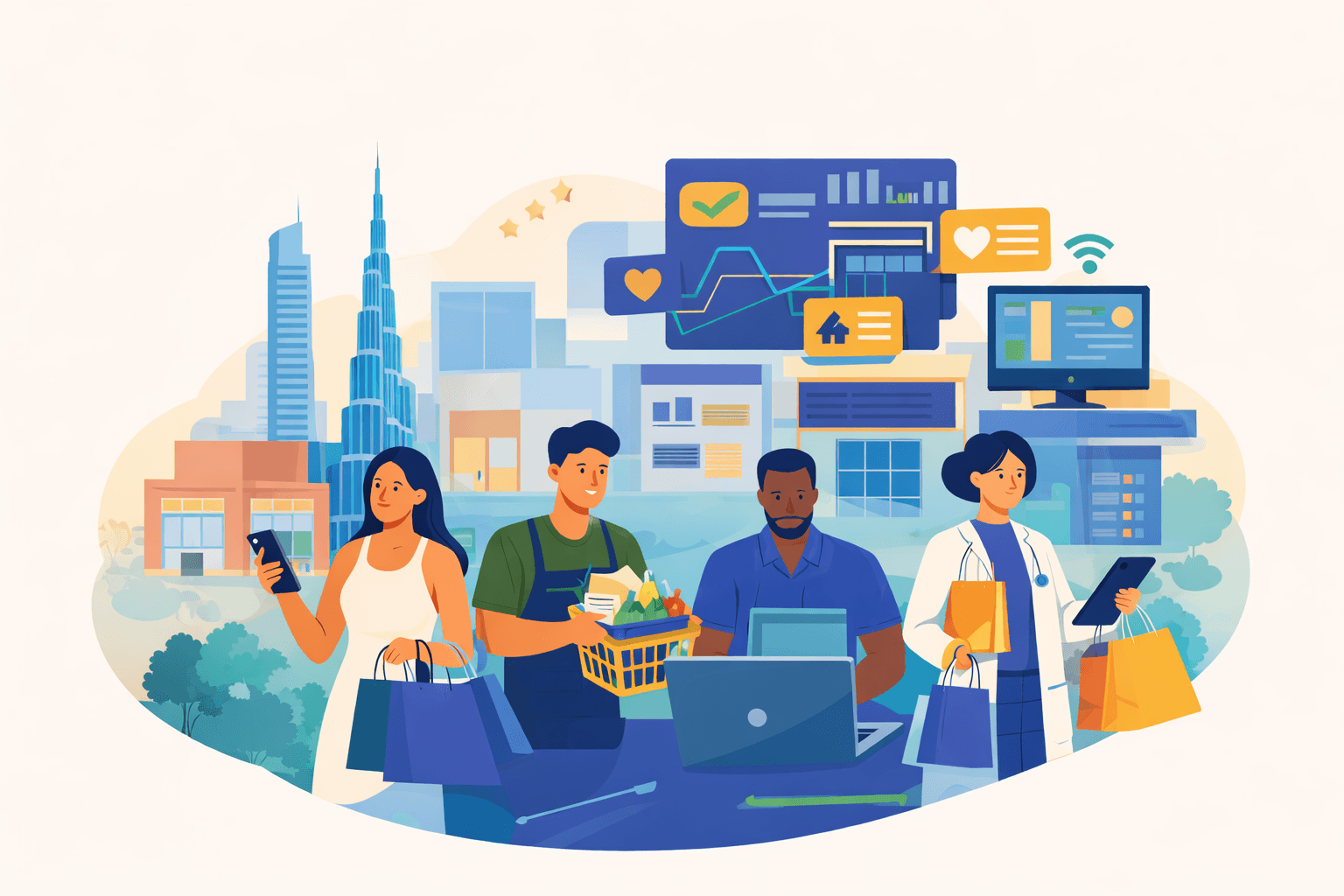
Personalization in retail is no longer a strategic choice. It has become a baseline expectation for brands across the UAE. Yet many brands still rely on broad campaigns and generic messaging, leading to lower engagement, fewer repeat purchases, and rising acquisition costs. As customer expectations evolve, irrelevant experiences make it harder to compete and retain loyalty.
The key is building a data-driven personalization strategy that connects every touchpoint across the customer journey. When executed well, personalization helps retailers deliver relevant experiences, strengthen customer relationships, and drive measurable growth.
In this guide, we break down how personalization in retail UAE works, why it matters, and how to implement it effectively.
What Is Personalization in Retail?
Personalization in retail is the practice of using customer data to deliver relevant products, offers, pricing, and experiences tailored to individual shoppers. Retail personalization uses first-party data, predictive analytics, and segmentation to create a personalized retail experience across online and offline channels.
Instead of sending the same promotion to all customers, retailers:
Recommend products based on past purchases
Trigger offers based on behavior
Adjust messaging based on lifecycle stage
Personalize loyalty rewards based on engagement
This shift from mass marketing to customer personalization in retail drives stronger emotional engagement and measurable business impact. It also improves marketing efficiency by boosting engagement rates and delivering stronger returns on investment.
Why Personalization Matters in UAE Retail
Personalization matters in UAE retail because customers expect relevant, seamless, and tailored experiences, and brands that fail to deliver risk losing loyalty and repeat business. In a highly competitive and digitally advanced market, personalization is becoming a direct driver of both revenue growth and customer retention. With over 60% of consumers actively seeking tailored recommendations, AI-driven personalization helps brands stand out by delivering timely and relevant offers to a diverse and tech-savvy customer base. Without retail loyalty personalization, retailers struggle to:
Increase repeat purchase rate
Improve CLV
Differentiate in a promotion-heavy market
According to McKinsey, effective personalization can drive revenue uplifts of 5–15% and improve marketing efficiency by 10-30% when executed correctly. In the UAE, where customer acquisition costs continue to rise due to intense digital competition, personalization in retail becomes a profitability lever and a core growth driver.
How Personalization in Retail Works
Personalization in retail works by converting raw customer data into actionable insights and delivering targeted engagement at scale. It follows a continuous loop of data, insight, action, and measurement.
The Retail Personalization Flywheel
1. Data Collection
Retailers gather first-party data from multiple touchpoints, including POS transactions, ecommerce behavior, loyalty programs, mobile apps, and in-store interactions. This creates the core infrastructure for customer personalization in retail.
2. Customer Understanding
Using segmentation, cohort analysis, and predictive analytics, retailers develop a unified customer view to identify high-value customers, detect churn risk, predict future purchases, and understand price sensitivity. This step converts raw data into meaningful insights that guide decision-making.
3. Personalized Execution
Insights are activated across channels through targeted offers, personalized email and SMS journeys, dynamic website recommendations, tiered loyalty programs, and app-based promotions. This stage defines the quality and relevance of the personalized retail experience delivered to customers.
4. Measurement & Optimization
Retailers continuously track performance metrics such as offer redemption rates, repeat purchase rates, customer lifetime value uplift, basket growth, and loyalty engagement. Ongoing optimization ensures personalization efforts remain effective and deliver measurable business impact.
Advanced capabilities such as AI and machine learning further improve personalization by predicting customer needs, enabling real-time engagement, and supporting hyper-personalized experiences that adapt to individual behaviors and contexts.
Types of Personalization in Retail
Retail personalization uses behavioral, demographic, and transactional data to deliver tailored experiences across channels, helping retailers increase engagement, loyalty, and average order value (AOV). Here are the key types of personalization in retail.
1. Product Personalization
Retailers recommend relevant products based on browsing behavior, past purchases, and predictive insights. AI-powered recommendation engines can also suggest complementary items or replenishment reminders, which are widely used by grocery retailers in the UAE to drive repeat purchases and increase basket size.
2. Offer & Promotion Personalization
Promotions are targeted to customers most likely to convert instead of being distributed broadly. Behavioral triggers such as cart abandonment, price drops, or milestone rewards allow retailers to deliver timely and relevant offers while protecting margins and improving response rates.
3. Content & Messaging Personalization
Communication is customized based on customer lifecycle stage, preferences, and engagement history. For example.
New shoppers receive onboarding offers
High-value customers receive VIP access or exclusive benefits
Lapsed customers receive win-back campaigns
This approach strengthens retail loyalty personalization strategies and improves engagement across email, SMS, apps, and digital channels.
4. Pricing & Incentive Personalization
Dynamic incentives and targeted discounts based on predicted behavior help increase incremental sales while maintaining profitability. Retailers can tailor rewards based on price sensitivity, purchase frequency, or loyalty tier.
5. In-Store Personalization
Using loyalty and transaction data at POS, retailers can trigger relevant rewards, personalized offers, or product recommendations during in-store visits. This is especially important in personalization in retail UAE, where mall-based and physical retail continue to play a significant role.
Role of AI & Data in Retail Personalization
AI and data power retail personalization by analyzing customer behavior, purchase history, and real-time interactions to deliver tailored recommendations, marketing messages, and pricing strategies. These technologies allow retailers to move from reactive campaigns to predictive engagement, enabling hyper-segmentation, improving conversion rates, reducing cart abandonment, and strengthening customer loyalty.
How AI Enables Personalization
AI enables personalization in retail by predicting customer behavior instead of reacting to past actions. It forecasts next purchases, churn risk, optimal discounts, and high-value customers early in their lifecycle. AI-powered recommendations and intelligent segmentation drive precise targeting, while generative AI creates personalized content that improves engagement and click-through rates.
First-Party Data in a Cookie-Less World
As third-party cookies decline, first-party data is becoming essential for personalization in the retail UAE. Loyalty programs, mobile apps, ecommerce platforms, and POS systems create a unified data ecosystem, enabling retailers to deliver consistent, insight-driven experiences across connected digital and physical channels.
Benefits of Personalization in Retail
Personalization in retail increases repeat purchases, improves CLV, improves engagement, and optimizes promotional spend. Here are a few key benefits of personalization in retail.
Increases Revenue and Conversions: Personalized experiences, such as targeted offers and product recommendations, lead to higher conversion rates, with many customers more likely to add items to their basket when suggestions are relevant.
Boosts Customer Loyalty and Retention: Personalized communication and tailored experiences build emotional connections, fostering long-term loyalty and reducing customer churn.
Improves Customer Experience: Tailoring the shopping journey reduces the effort required to discover relevant products, leading to higher satisfaction and smoother interactions across channels.
Higher Average Order Value (AOV): Relevant recommendations enable effective cross-selling and upselling, often generating meaningful increases in basket size and incremental revenue.
More Efficient Marketing Spend: Targeting customers based on behavior and intent instead of broad campaigns improves marketing efficiency and reduces wasted spend.
Actionable Customer Insights: Advanced analytics provides a comprehensive view of customers, helping retailers predict trends, understand preferences, and personalize engagement at scale.
When implemented effectively, personalization in retail becomes a long-term growth driver that improves customer loyalty, increases lifetime value, and enhances overall business performance.
Personalization in Retail: UAE-Specific Use Cases
Personalization in retail UAE reflects a unique blend of high digital adoption, strong mall culture, and demand for premium, seamless experiences.
1. AI-Powered Abandoned Cart Recovery
Leading ecommerce platforms such as Noon and Namshi use personalized reminders featuring the exact abandoned product along with limited-time incentives, significantly improving conversion rates.
2. Hyper-Personalized Recommendations in Fashion and Luxury
Luxury retailers like Chalhoub Group use AI to analyze browsing and purchase history to deliver curated product suggestions aligned with individual style preferences. Some brands also enable visual search to recommend similar items.
3. Automated Replenishment for Consumables
Retailers such as Carrefour (Majid Al Futtaim) use predictive analytics to send reorder reminders for groceries and beauty products just before customers are likely to run out, enabling convenient one-click repurchase.
4. Interactive In-Store Experiences
Retailers like IKEA UAE use AR and AI to help customers visualize products in their homes, while fashion brands are introducing smart fitting rooms that suggest complementary items and sizes in real time.
5. Phygital Loyalty Integration (In-store + Digital)
UAE retailers are blending online browsing with in-store experiences to create seamless journeys. For example, luxury brands in malls like Dubai Mall use app-based notifications to invite customers to try items they viewed online. Loyalty platforms such as Emirates NBD use AI to deliver personalized rewards and offers, increasing engagement and repeat visits.
Challenges in Retail Personalization
Retailers face several challenges when implementing effective personalization, most of which stem from data complexity, technology limitations, and operational alignment. Here are the common challenges in retail personalization:
Data silos and integration gaps prevent a unified, 360-degree customer view across POS, ecommerce, and loyalty systems.
Poor data quality and accuracy lead to ineffective targeting and irrelevant customer experiences.
Technology and analytics limitations, including a lack of advanced AI tools and skilled data capabilities.
Omnichannel consistency issues when trying to deliver seamless experiences across digital and physical channels.
Privacy and regulatory compliance requirements that add complexity to collecting and using customer data responsibly.
Rising implementation costs and unclear ROI, especially for advanced personalization initiatives.
Organizational silos between teams, such as marketing, merchandising, and operations, slow execution.
Generic loyalty programs and over-discounting, which reduce effectiveness and erode margins.
Without a unified customer view and strong data governance, customer personalization in retail becomes fragmented, limiting its ability to deliver meaningful business impact.
How to Build a Personalization Strategy for Retail
Building an effective personalization strategy requires aligning data, technology, and customer experience around clear business goals. Retailers that succeed focus on creating a unified customer view, activating insights across channels, and continuously optimizing based on performance.
Key Steps to Build a Retail Personalization Strategy
1. Define Clear Business Objectives: Start by identifying what you want to achieve, such as increasing repeat purchases, improving customer lifetime value, boosting conversion rates, or enhancing loyalty engagement. Clear goals help prioritize initiatives and measure success.
2. Build a Unified Customer Data Foundation: Integrate data from POS, ecommerce, mobile apps, and loyalty programs to create a single customer view. Strong data governance and quality controls are essential to ensure accuracy and usability.
3. Segment and Understand Customers: Use behavioral, transactional, and demographic data to create meaningful segments. Identify high-value customers, churn risks, and key purchase drivers to guide personalization efforts.
4. Activate Personalization Across Channels: Deliver targeted offers, personalized messaging, product recommendations, and tailored experiences across digital and in-store touchpoints to ensure consistency.
5. Leverage AI and Predictive Analytics: Use machine learning to forecast customer behavior, recommend next best actions, and optimize timing for engagement to improve effectiveness.
6. Test, Measure, and Optimize: Continuously track metrics such as conversion rates, repeat purchase rate, engagement, and CLV uplift. Use testing and insights to refine campaigns and improve performance over time.
7. Ensure Privacy and Trust: Be transparent about data usage and ensure compliance with privacy regulations to build customer trust while delivering value through personalization.
Many retailers also partner with platforms like Loyalytics to unify customer data, activate real-time personalization, and measure performance across channels.
KPIs to Measure Retail Personalization Success
To evaluate personalization in retail effectively, retailers need to track performance across engagement, revenue, and customer loyalty metrics. These KPIs help measure how well personalization efforts resonate with customers and contribute to business growth.
Metric | What It Measures | Why It Matters |
Conversion rate | Actions after personalized content | Shows sales impact |
CTR | Content engagement | Indicates relevance |
AOV | Spend per order | Reflects upsell success |
CLV | Customer value over time | Measures long-term impact |
Engagement rate | User interaction | Shows content effectiveness |
Retention rate | Returning customers | Indicates loyalty |
NPS | Customer satisfaction | Predicts growth |
Revenue per user | Revenue per customer | Tracks financial impact |
ROI | Return on personalization | Justifies investment |
These metrics tie directly to profitability, making retail loyalty personalization measurable and accountable.
Future of Personalization in Retail
The future of personalization in retail will be shaped by rapid advances in AI, predictive analytics, and privacy-first data strategies that enable brands to deliver more relevant and real-time experiences. Key trends shaping the future include:
AI-driven decisioning and hyper-personalization using real-time behavioral data to deliver highly relevant content, offers, and experiences.
Predictive personalization that anticipates customer needs and orchestrates next-best actions across the journey.
Privacy-conscious personalization built on first-party and zero-party data as regulations and consumer expectations evolve.
Personalized mobile and loyalty experiences that deepen engagement through tailored rewards and app-based interactions.
Facial recognition and in-store technologies, with 37% of consumers expecting wider adoption of biometric and location-based recognition tools.
AI-enabled store associates, with 40% of consumers believing personal shoppers will use AI tools to enhance service.
Community-driven personalization as brands invest in direct engagement channels to build stronger customer relationships.
Generative AI will accelerate personalization in UAE retail through dynamic content, smarter recommendations, and immersive omnichannel experiences. As competition increases and customer expectations rise, personalization in retail UAE will become a baseline capability, requiring retailers to continuously innovate while balancing relevance, trust, and privacy.
Conclusion
Personalization in retail is essential for delivering relevant experiences that drive loyalty and growth. Retailers that build strong data foundations, use AI insights, and activate across channels can turn customer understanding into measurable results. By focusing on continuous improvement, clear governance, and customer trust, brands can scale personalization effectively and stay competitive as expectations continue to rise.
FAQs
What is personalization in retail?
Personalization in retail is the use of customer data and analytics to deliver relevant products, offers, and experiences tailored to individual shoppers across channels.
How does personalization increase sales?
By increasing relevance, retail personalization improves conversion rates, repeat purchases, and average basket size while reducing churn.
What data is needed for retail personalization?
Retailers need transaction history, behavioral data, loyalty engagement data, and demographic insights to enable effective customer personalization in retail.
Is personalization only for ecommerce?
No. Personalization in retail UAE applies across ecommerce, mobile apps, and physical stores using POS and loyalty integration.
How do loyalty programs support personalization?
Loyalty programs generate first-party data, enabling retail loyalty personalization through targeted rewards, tier-based benefits, and predictive engagement strategies.
Related Blogs

Loyalty Program ROI Calculator: How to Measure the Real Impact of Your Loyalty Strategy
Most brands track loyalty metrics but fail to measure true ROI. A loyalty ROI calculator helps quantify incremental revenue, retention lift, and costs to drive data-driven growth.
Apr 10, 2026

When Loyalty Turns Against You: Understanding and Preventing Program Abuse
Loyalty program fraud hides behind strong engagement metrics, draining revenue through fake enrollments, points abuse, and manipulation. Detecting and preventing it is key to protecting margins, data accuracy, and long-term program growth.
Apr 2, 2026
Why Most Loyalty Programs Fail, and How AI Is Quietly Fixing Them
Most loyalty programs fail due to poor personalization and static execution. AI transforms them into dynamic systems that predict behavior, personalize in real time, and drive measurable retention, engagement, and ROI.
Apr 1, 2026